Introduction
Many startups fail not because the idea is wrong, but because they build too much too soon. Founders often invest months into developing a full product, only to realize that users do not need most of the features. This leads to wasted budget, delayed launches, and missed opportunities.
This is where the mvp development process becomes critical in 2026. Instead of building everything at once, startups can launch a focused product, test real demand, and improve based on user feedback. It is a smarter way to build products with less risk and better outcomes.
What is MVP Development Process
The mvp product development process is a structured approach to building a simplified version of a product with only essential features. The goal is to validate the idea quickly without investing excessive time and resources.
An MVP is not a low-quality product. It is a focused product that solves a core problem for users. Startups use this approach to test assumptions, understand user behavior, and refine their product before scaling.
The mvp development process helps teams avoid unnecessary complexity. It keeps the focus on what matters most, which is delivering value to users and learning from real-world usage.
Why MVP Development Matters for Startups
Building a product without validation is risky. Startups often operate with limited resources, so every decision matters. The MVP approach reduces this risk significantly.
First, it allows faster validation. Instead of waiting months, startups can launch early and gather feedback. This helps in making better product decisions.
Second, it improves cost efficiency. By focusing only on core features, startups avoid spending money on unnecessary development.
Third, it supports better decision-making. Real user feedback is more valuable than assumptions. The mvp development steps minimum viable product process ensures that decisions are based on actual data.
MVP Development Process Explained Step-by-Step
Understanding each stage of the mvp development process is essential for building a successful product. Each step plays a role in reducing risk and improving outcomes.
Step 1: Idea Validation
The first step is to validate the idea. This involves identifying the problem your product will solve and understanding your target audience.
Market research is important here. Look at competitors, analyze user needs, and identify gaps. This step ensures that you are building something people actually want.
Step 2: Define Core Features
Once the idea is validated, the next step is to define the core features. Focus only on essential functionality that solves the main problem.
Avoid feature overload at this stage. Adding too many features increases complexity and delays development. The goal is to keep the product simple and effective.
Step 3: Design and User Experience
Design plays a crucial role in user adoption. Even a simple product should be easy to use and visually clear.
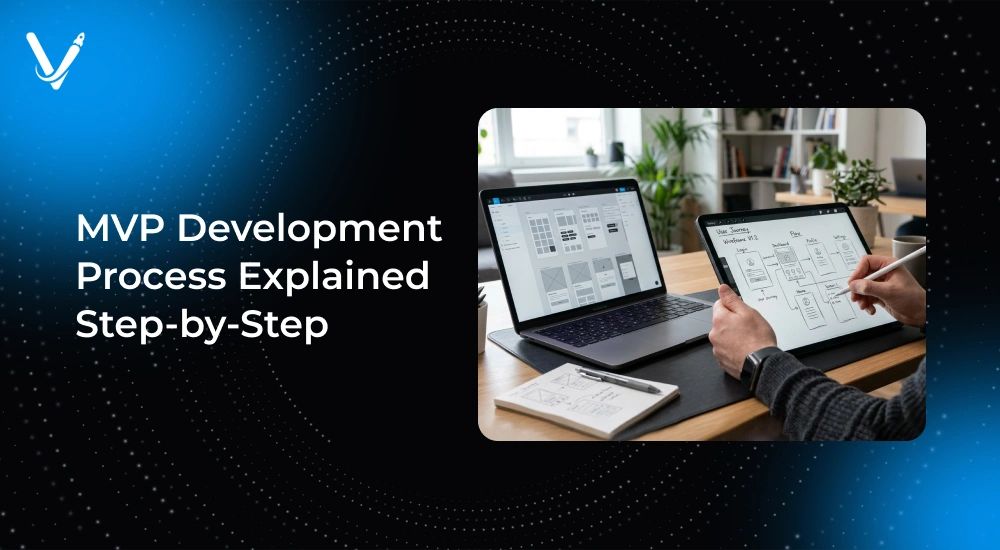
Start with wireframes to map out user flows. Then move to basic UI design. The focus should be on usability rather than perfection.
Step 4: Development Phase
This is where the product is built. The development phase includes both frontend and backend work.
Developers focus on creating a stable and functional product. The architecture should be simple but scalable enough to support future growth.
Step 5: Testing and Quality Assurance
Testing ensures that the product works as expected. Bugs and performance issues are identified and fixed during this stage.
Skipping testing can lead to poor user experience. Even an MVP should meet basic quality standards to build trust with users.
Step 6: Launch and Feedback
After testing, the product is launched to a limited audience. This is often called a soft launch.
The goal is to collect user feedback. Understand how users interact with the product and identify areas for improvement.
Step 7: Iteration and Scaling
The final step is to improve the product based on feedback. This is where real growth begins.
Startups refine features, fix issues, and gradually add new functionality. This iterative approach ensures that the product evolves based on user needs.
How to Create MVP Website Development Process
For web applications, the approach is similar but requires specific considerations. Understanding how to create mvp website development process helps startups build efficient web platforms.
Start with a clear user journey. Define how users will interact with the website and what actions they will take. Focus on core pages and essential features.
Choose a scalable technology stack. Even though it is an MVP, the foundation should support future growth.
Keep the design simple and functional. Avoid unnecessary elements that do not add value. The goal is to launch quickly and learn from users.
MVP Development Services End-to-End Process Ideation to Deployment
Many startups prefer working with agencies that offer mvp development services end-to-end process ideation to deployment. This approach provides a structured path from idea to launch.
The process starts with ideation and planning. Teams define the product vision, target audience, and core features.
Next comes design and development. The focus is on building a functional product within a short timeframe.
Testing and deployment follow, ensuring the product is ready for users. After launch, teams continue to support and improve the product based on feedback.
This end-to-end approach reduces complexity for startups and ensures a smoother development journey.
Common Mistakes in MVP Development
Many startups struggle with MVP development because of avoidable mistakes. Recognizing these issues can save time and resources.
Overbuilding is one of the most common problems. Adding too many features defeats the purpose of an MVP and delays launch.
Ignoring user feedback is another issue. The MVP is meant to learn from users, not just to release a product.
Poor planning also leads to challenges. Without clear goals, the development process becomes inefficient and confusing.
Tips to Build a Successful MVP
Building a successful MVP requires a clear strategy and disciplined execution. These practical tips can help startups achieve better results.
- Focus on solving one core problem effectively
- Keep the feature set minimal and relevant
- Validate your idea before starting development
- Prioritize user feedback after launch
- Plan for scalability from the beginning
Following these principles ensures that your MVP delivers value and sets a strong foundation for growth.
Conclusion
The mvp development process is not just a development method. It is a strategic approach that helps startups build smarter and reduce risk.
By focusing on essential features and real user feedback, startups can create products that truly meet market needs. This approach saves time, reduces costs, and improves decision-making.
In a competitive environment, building fast and learning faster is key. A well-executed MVP allows startups to adapt quickly and grow with confidence.
If you are ready to turn your idea into a market-ready product, Vasundhara Infotech can guide you through the entire MVP journey. From ideation to deployment, our team ensures your product is built efficiently, validated quickly, and designed for future growth. Connect with us today to start building your MVP with confidence.





 Apr 14, 2026