mobile app development
Web3 Android & iOS App Development: Complete Beginner Guide

 Dec 5, 2025






In Article:
Key Takeaways
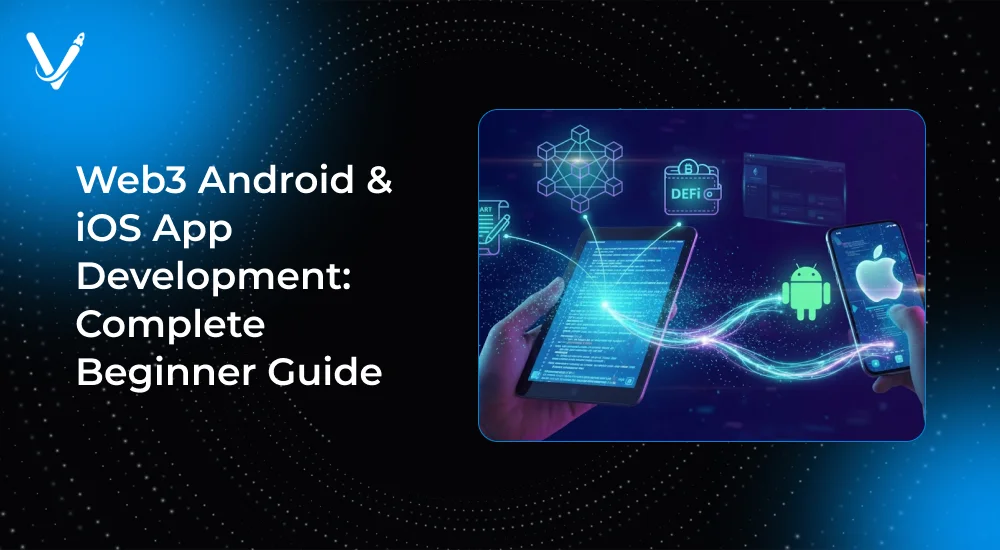
The mobile world is entering a new era powered by decentralization, transparency, and user ownership. This shift is led by Web3 iOS app development and Android blockchain solutions, including web3 android app development, a new layer of the internet built on blockchain. It transforms how apps work, how businesses operate, and how users interact with digital products. For beginners exploring Web3 Android and iOS app development, the space may look complex at first, but its business opportunities become clear once the foundation is understood.
Web3 changes the way mobile apps store data, authenticate users, manage payments, deliver value, and reward engagement. With blockchain powering features such as on-chain transactions, digital assets, decentralized identity, and smart contract automation, businesses unlock entirely new ecosystems around their apps. Instead of traditional centralized systems where platforms control everything, Web3 apps allow users to own assets, verify information independently, and interact without intermediaries.
For businesses, this creates a powerful advantage. Companies can deliver mobile experiences that feel more secure, more transparent, and more engaging. They can build apps that reach global users instantly, monetize through digital assets, reduce operational expenses, and build strong communities. These benefits explain why industries such as finance, gaming, healthcare, entertainment, supply chain, and real estate are rapidly adopting Web3.
This beginner-friendly guide explores how Web3 Android and iOS app development works in a business context. The goal is not to overwhelm you with technical jargon but to help you understand how Web3 changes what mobile apps can achieve, how companies can use it strategically, and why it has become one of the most promising innovations of this decade. You will learn what Web3 is, how it integrates into mobile platforms, the business advantages it unlocks, essential tools and processes, popular use cases, and practical steps for planning a successful Web3 mobile app.
Let’s discover how Web3 mobile development opens new possibilities for businesses across the world.
Web3 represents an internet where users own their data, digital assets, and identities instead of platforms controlling everything. This ownership is enabled by blockchain, a distributed system that records and verifies information transparently.
In traditional mobile apps, data lives on centralized servers managed by a company. In Web3 apps, data lives on decentralized networks across thousands of computers. This structure removes the need for a central authority and gives users stronger control and security. It also creates new ways for businesses to design apps.
Here are the core characteristics of Web3 that matter for businesses.
Information is stored across many independent computers instead of one server, making systems more secure and resistant to failure.
Users control digital assets through wallets, which also act like decentralized identities.
These are self-executing rules stored on the blockchain. They automate processes such as rewards, transactions, memberships, and digital interactions without manual action.
Assets can be represented as tokens, enabling digital ownership, tradable value, and reward systems.
Every blockchain interaction is publicly verifiable, improving trust in the system.
Together, these qualities transform mobile apps into powerful ecosystems with enhanced trust, transparency, and value exchange.
Businesses investing in Web3 iOS app development gain a competitive advantage by combining blockchain innovation with Apple’s secure and high-performance ecosystem.
Web3 Android and iOS app development gives businesses a competitive advantage. Companies gain better security, stronger engagement, innovative monetization options, and more efficient systems.
Below are the major business benefits of Web3 mobile development.
Blockchain increases security by eliminating single points of failure. Data cannot be altered without consensus, making it one of the safest technologies available. Web3 apps help businesses build trust with users through open verification and tamper-proof interactions.
This is helpful for industries dealing with sensitive data such as finance, healthcare, supply chain, and identity management.
Web3 enables digital ownership, allowing businesses to design unique revenue models using:
• NFTs
• Access tokens
• Membership passes
• DeFi features
• Play-to-earn reward systems
• Tokenized subscription models
Users can buy, sell, trade, or hold digital assets within the app. These assets create additional engagement and long-term loyalty.
Many customers trust businesses more when information is transparent and verifiable. Blockchain records every interaction publicly, helping companies provide clarity and fairness in processes such as transactions, delivery tracking, appointments, gaming actions, and content verification.
Transparency increases loyalty, reduces disputes, and builds strong communities.
Web3 supports instant global payments without middlemen such as banks or credit card processors. This improves:
• Cross-border purchases
• Digital commerce
• Gaming transactions
• Subscription billing
• Reward payouts
Lower fees and faster processing improve the customer experience and business efficiency.
Web3 apps allow businesses to involve their community directly through tokens, governance features, and reward models. Customers become partners who engage, promote, and support the brand.
Apps that build strong communities grow faster and enjoy higher customer retention.
Smart contracts automate rules and transactions without human involvement. This reduces costs linked to:
• Verification processes
• Manual approvals
• Transaction validation
• Record management
• Third-party fees
Automation leads to faster operations and lower overhead.
Blockchain networks operate globally. A Web3 mobile app can serve users anywhere without geographical limitations. This is extremely valuable for decentralized finance apps, gaming platforms, NFT projects, marketplaces, and creative ecosystems.
The global reach allows businesses to scale rapidly.
Understanding how Web3 integrates with mobile development helps beginners see how business features are implemented. Web3 mobile apps include three major layers.
This is where data lives. Blockchains handle:
• Transactions
• Asset ownership
• Token balances
• Smart contract execution
Popular networks include Ethereum, Polygon, Solana, Avalanche, Arbitrum, Fantom, and Binance Smart Chain.
Businesses choose a blockchain based on scalability, fees, security, and user base.
Smart contracts handle the logic of the app. They manage:
• Token transfers
• NFT creation
• Memberships
• Payment flows
• Governance rules
• Rewards
• Game logic
Smart contracts ensure fairness and transparency. They execute automatically based on coded rules.
This is the mobile interface users interact with. In Web3 iOS app development, developers build the application layer using tools such as::
• React Native
• Flutter
• Swift
• Kotlin
This layer connects the mobile UI with smart contracts and blockchain nodes using Web3 libraries or SDKs.
Together, these layers create a decentralized mobile experience that blends traditional app design with blockchain functionality.
Web3 iOS app development is growing rapidly because Apple users represent a high-value audience with strong engagement rates. Businesses targeting premium customers benefit from:
• Secure wallet integrations on iOS
• Smooth UI/UX within Apple’s ecosystem
• High-performance blockchain transactions
• Strong privacy controls
• Trusted App Store distribution
As blockchain adoption increases, companies are prioritizing Web3 iOS app development to reach global users through reliable and secure mobile environments.
Web3 apps introduce several exciting features that make them different from classic mobile apps.
Web3 apps use crypto wallets as login systems. Instead of entering a password, users verify identity through wallet signatures. This improves security and eliminates password breaches.
Wallets also store digital assets such as tokens and NFTs.
Popular wallets include:
• MetaMask
• Trust Wallet
• Coinbase Wallet
• WalletConnect-compatible options
Wallet integration is one of the most essential components of Web3 mobile apps.
Users control their own identity. Apps request signature verification instead of storing login data. This removes central databases and reduces data-related risks.
Decentralized identity is becoming popular for industries such as workforce apps, health records, digital portfolios, and professional certification.
Web3 apps allow users to make quick payments directly through blockchain networks. Businesses use this feature to enable:
• App purchases
• Game item transfers
• Subscription payments
• Service fees
• Creator tips
• Marketplace transactions
Payments settle instantly and globally.
Businesses leverage NFTs for:
• Digital collectibles
• Event tickets
• Memberships
• Certification badges
• VIP access
• Loyalty programs
• Creative licensing
NFTs allow verifiable ownership that users can trade or store inside the app.
Smart contracts remove manual tasks. Examples include:
• Automatic payment release after delivery
• Royalty distribution
• Reward distribution
• Ownership verification
• Loyalty tier updates
Businesses gain efficiency and fewer errors.
Some data cannot go on blockchain due to size, so Web3 apps use decentralized storage systems like:
• IPFS
• Arweave
• Filecoin
These systems ensure data stays tamper-proof and censorship-resistant.
Web3 offers endless possibilities for businesses across industries. Below are some of the strongest use cases gaining global adoption.
DeFi apps allow users to:
• Trade tokens
• Stake assets
• Borrow and lend
• Earn yields
• Swap currencies
DeFi mobile apps unlock global financial access without traditional banking.
Web3 gaming introduces digital ownership of:
• Characters
• Game skins
• Virtual land
• Weapons
• Collectibles
• Reward tokens
Players earn real value and can trade items outside the game.
This creates stronger engagement and new monetization channels.
Businesses launch apps that allow users to:
• Mint NFTs
• Buy and sell NFTs
• Showcase collections
• Join exclusive communities
These platforms help creators and collectors connect in secure environments.
Brands can create loyalty tokens to reward customers for engagement. Tokens unlock:
• Discounts
• VIP access
• Private groups
• Reward tiers
Users can trade tokens, increasing program value.
Web3 apps improve patient privacy and access control. Data is encrypted, decentralized, and controlled by the patient.
Hospitals can verify records instantly and securely.
Businesses verify the authenticity and movement of goods through Web3 mobile apps. Each step is recorded on the blockchain, improving:
• Transparency
• Traceability
• Trust
• Efficiency
This is useful for food, fashion, electronics, pharmaceuticals, and luxury goods.
Property value can be divided into digital tokens. This allows fractional ownership and easy trading.
Web3 real estate apps help investors access global markets securely.
Creators can own their content and earn through:
• Tips
• NFT assets
• Token-gated events
• Exclusive content
• Community memberships
This model empowers creators more than traditional platforms.
Planning a Web3 Android or iOS app requires a clear strategy built around user needs and blockchain features.
Apps can solve many challenges, such as:
• Community growth
• New revenue streams
• Decentralized finance services
• Digital asset management
• Enhanced user security
• Token-based engagement
• Transparent service models
A clear purpose guides the development process.
Consider factors such as:
• Transaction fees
• Network speed
• Security
• Adoption
• Cross-chain support
Popular options include: Ethereum, Polygon, BNB Chain, Solana, and Avalanche.
Web3 concepts may be unfamiliar to beginners. The app must provide:
• Clear onboarding
• Easy wallet connection
• Helpful prompts
• Visual transaction guidance
• Transparent fees
• Smooth navigation
User education is essential for Web3 success.
Smart contracts require secure coding practices and audits to prevent risks. Contracts must be simple, efficient, and predictable.
Even though Web3 apps use blockchain, they still need backends for:
• Notifications
• Analytics
• Off-chain data
• Authentication checks
• Log storage
Mobile infrastructure must support growth.
Everything must be tested across multiple devices, networks, and wallets. Testing ensures smooth and reliable performance.
Web3 is powerful, but it also introduces unique challenges that businesses must understand.
Wallets, signatures, gas fees, and tokens may confuse beginners. Apps must prioritize education and simplicity.
Some blockchain networks have higher costs during busy periods. Businesses may choose scalable alternatives like Polygon or Solana.
Smart contracts must be secure because exploits can lead to financial loss.
Web3 is evolving, and regulations vary by region. Businesses must stay up-to-date.
Apple and Google have strict rules for apps involving crypto payments or NFTs.
Web3 continues to grow, and the coming years will bring powerful technologies and opportunities.
Users will interact seamlessly across multiple blockchains.
AI will analyze wallet behavior, create predictions, and personalize experiences.
Mobile apps will connect with AR, VR, digital land, avatars, and immersive digital economies.
Users will own portable identities stored securely in wallets.
Contracts will update dynamically with improved features.
Web3 Android and iOS app development represents one of the most exciting technological shifts in the digital world. Businesses gain the ability to deliver mobile experiences that empower users through ownership, transparency, and security. Web3 apps open the door to innovative revenue models, strong community engagement, global accessibility, and next-level trust.
This beginner-friendly business guide explored Web3 fundamentals, essential features, benefits, challenges, and opportunities. Even though Web3 may initially seem complex, the long-term value it brings to organizations is undeniably powerful. Companies adopting Web3 now position themselves as innovators, industry leaders, and pioneers in a new digital era shaped by decentralization.
If your business wants to explore how Web3 mobile development can elevate your services, strengthen your brand, or unlock new revenue streams, partnering with the right development team is essential.
Vasundhara Infotech specializes in secure, scalable, and user-friendly Web3 Android and iOS mobile app development. Our team builds world-class decentralized apps powered by blockchain, smart contracts, NFTs, DeFi systems, and token economies.
Unlock the next generation of mobile innovation with a partner who understands your vision.
Contact Vasundhara Infotech today and bring your Web3 idea to life.
Copyright © 2026 Vasundhara Infotech LLP. All Rights Reserved.