trending blog
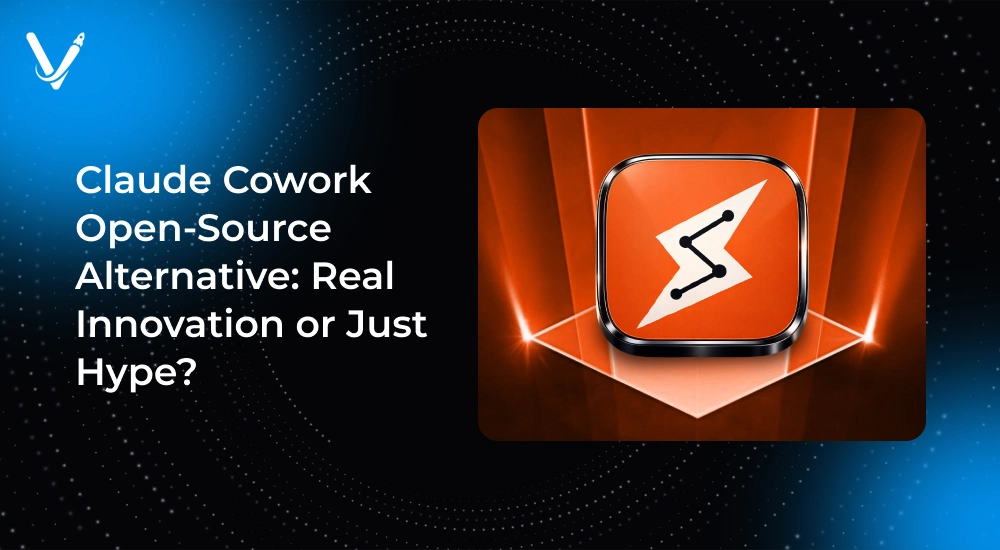
Claude Cowork Open-Source Alternative: Real Innovation or Just Hype?

 Apr 13, 2026






In Article:
Introduction: The Viral Claim Everyone Is Talking About
What Is a Claude Cowork Open-Source Alternative?
How Open Source AI Agents Actually Work
Why AI Coworker Tools Are Gaining Popularity
Claude vs Open Source AI: A Practical Comparison
Key Differences Between Claude and Open-Source AI
Is It Really 100% Open Source?
Benefits of Open Source AI Tools for Developers
Limitations and Challenges You Should Know
Who Should Use Open Source AI Agents?
The Bigger Trend: Growth of AI Agent Frameworks
Final Verdict: Real Innovation or Just Hype?
Conclusion
A bold claim has been making rounds across developer communities and social media platforms: someone has built a “Claude cowork open-source alternative,” and it is completely free and open. For many, this sounds like a breakthrough moment. The idea of having a powerful AI coworker without relying on paid tools is highly appealing.
However, viral trends in the AI space often mix reality with exaggeration. What looks like a major innovation at first glance can sometimes turn out to be a clever combination of existing tools. To understand the truth, it is important to break down what these systems actually offer and whether they can realistically compete with tools like Claude.
A Claude alternative open source tool is essentially a developer-built system designed to simulate the behavior of advanced AI assistants. These tools aim to function as AI coworker tools that can assist with coding, automation, and multi-step workflows rather than just answering questions.
Instead of being a single product, most of these systems are frameworks that combine multiple components. They bring together language models, memory systems, and execution layers to create a more interactive and task-driven experience.
The goal is not just conversation but collaboration. These tools attempt to act like a digital teammate that can help developers and teams complete tasks more efficiently.
To understand their capabilities, it is important to look at how open source AI agents are structured. Unlike proprietary platforms, these systems rely on modular architecture where different components are connected to work together.
Most open-source AI tools for developers follow a layered approach that includes:
This setup allows the system to handle more complex workflows compared to basic chatbots. However, the performance of the entire system depends heavily on how well these components are configured and integrated.
The rise of AI coworker tools is driven by both technological progress and market demand. Developers and businesses are actively exploring alternatives to expensive and closed AI systems.
Several factors are contributing to this growing interest. Cost is one of the biggest drivers, as many organizations are looking to reduce dependency on paid APIs. Flexibility is another major factor, as open-source tools allow customization based on specific needs.
Privacy concerns are also pushing adoption. Many companies prefer solutions that allow them to keep data within their own infrastructure. At the same time, the developer ecosystem is evolving rapidly, with more contributors building and improving open source AI agents.
When comparing Claude vs open source AI, it is important to understand that both serve different purposes. Claude is a highly refined system built with advanced infrastructure and extensive training, while open-source tools are more experimental and flexible.
Claude offers consistent performance, strong reasoning abilities, and ease of use. It is designed to work out of the box, making it suitable for a wide range of users. Open-source AI tools, on the other hand, require setup and customization, which can be both an advantage and a challenge.
This comparison highlights that open-source tools are not direct replacements but alternatives for specific use cases.
The claim that these tools are “100% open source” needs careful examination. While the code for many of these systems is publicly available, the complete ecosystem is often not fully open.
In many cases, these tools rely on external models or APIs to function effectively. Even when open models are used, they may require significant computing resources that are not accessible to everyone.
This means that the term “100% open source” can be misleading. It usually applies to the framework itself, not the entire AI system. Understanding this distinction is important for anyone evaluating these tools.
Open source AI tools for developers offer several advantages that make them attractive, especially for technical users. These tools allow developers to experiment, customize, and build solutions tailored to their needs.
One of the biggest benefits is flexibility. Developers can modify the system, integrate different models, and create unique workflows. This level of control is not possible with most proprietary tools.
Another advantage is innovation. Open-source communities encourage collaboration, which leads to faster development and new ideas. Developers can learn from existing projects and contribute to improving them.
Despite their advantages, open-source AI coworker tools come with several limitations that should not be ignored. These challenges can affect both usability and performance.
First, these tools often require technical expertise to set up and maintain. Users need to understand how different components work together, which can be time-consuming. Second, performance may not match that of advanced systems like Claude, especially in complex tasks.
Infrastructure is another concern. Running open-source models efficiently requires computing resources, which may not be feasible for all users. Additionally, ongoing maintenance and updates are necessary to keep the system functional.
Not every user will benefit equally from open source AI agents. Their effectiveness depends on the user’s technical skills and specific requirements.
Developers and technical teams are the primary audience for these tools. They can leverage the flexibility and customization to build tailored solutions. Startups and research teams may also find value in experimenting with these systems.
On the other hand, non-technical users may find these tools difficult to use. Businesses that require reliable and scalable solutions may prefer proprietary platforms that offer better support and performance.
The popularity of AI agent frameworks reflects a broader shift in the AI industry. There is a growing focus on building systems that can perform tasks autonomously rather than simply responding to prompts.
AI collaboration tools are evolving rapidly, enabling more complex workflows and integrations. Developers are moving towards systems that can plan, execute, and adapt to tasks in real time.
This trend is supported by the expanding developer ecosystem. More contributors are building open-source solutions, which accelerates innovation and adoption. However, the gap between experimental tools and production-ready systems still remains significant.
The idea of a Claude cowork open-source alternative is both exciting and complex. On one hand, these tools represent genuine innovation in how AI systems are built and used. They offer flexibility, customization, and new possibilities for developers.
On the other hand, the claims surrounding them are often exaggerated. They are not true replacements for Claude and do not yet match its performance or reliability. The term “100% open source” is also not as straightforward as it seems.
In reality, these tools are best viewed as experimental platforms with strong potential. They are valuable for developers and innovators but may not be suitable for all use cases.
The rise of open source AI coworker tools highlights a major shift in the AI landscape. These systems are pushing the boundaries of what is possible, but they also come with limitations that cannot be ignored.
Understanding the difference between innovation and hype is essential for making informed decisions. While these tools offer exciting opportunities, they are not a one-size-fits-all solution.
Businesses looking for reliable and scalable AI solutions should focus on expert-built systems rather than experimental tools. Partnering with an experienced development company can help turn AI trends into real business value.
If you're planning to integrate AI into your business, now is the time to move beyond experiments. Connect with Vasundhara Infotech to build secure, scalable, and performance-driven AI solutions tailored to your goals.
Copyright © 2026 Vasundhara Infotech LLP. All Rights Reserved.