MVP/Product development
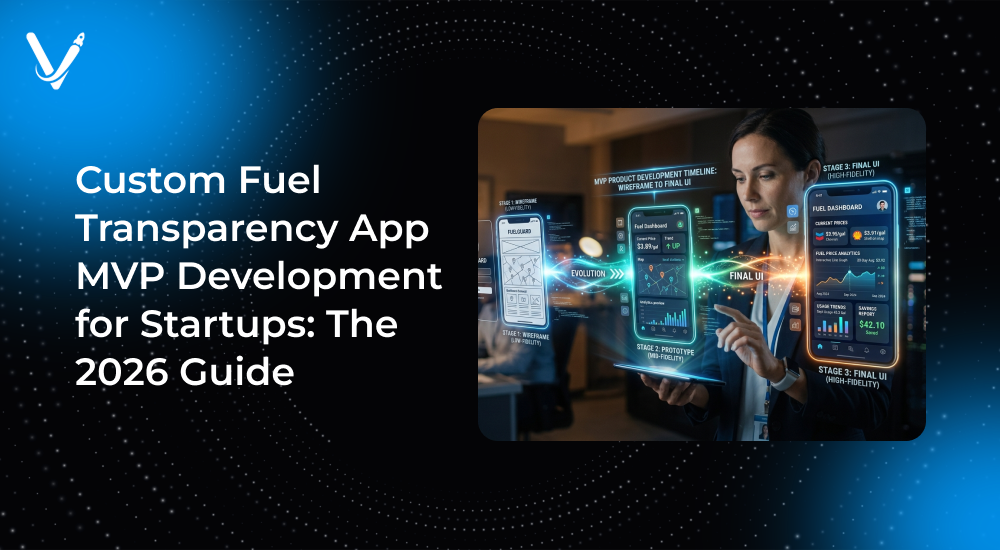
Custom Fuel Transparency App MVP Development for Startups: The 2026 Guide

 Apr 16, 2026







In Article:
Every year, the commercial fleet sector incurs over $1.2 billion of losses due to fuel thievery, fraud, and misuse. That amount isn’t a mistake in bookkeeping; each dollar spent on fuel by fleet operators has 15 to 25 cents disappear due to antiquated fuel cards, a complete absence of real-time visibility, and a method for reconciling that was created in an era that predated the smartphone. So if you’re a startup founder, CTO, or investor exploring the fuel technology space right now, that figure does not represent an emergency; it represents an opportunity for capturing billion-dollar-sized business niches through custom MVP development for startups specifically targeting those niches.
Fleet managers, transport companies, and fuel vendors benefit from an app that allows complete, real-time access to how many litres of fuel are purchased and used over time throughout their business. It is not simply an expense reporting tool or a reformed fuel card reporting tool but a connected, intelligent platform connecting the pump to the decision-maker — capturing transaction data as well as verifying by GPS location, identifying the driver, seeing how much was paid for fuel at that moment, and calculating your fuel usage with no human input at all.
Fleet operators today commonly use one of three methods to manage their fleets: the traditional fuel card from an older supplier, a traditional spreadsheet system, or an expensive new enterprise-level fleet management software solution like Samsara or Geotab that costs between $35-$100 per vehicle per month and was developed primarily for large Fortune 500 Companies with sophisticated logistics operations.
None of the above solutions really addresses the actual problem. Fuel cards allow a driver to approve the fuel purchase by swiping the card through a magnetic reader but do not require any verification of the location of the fuel purchase. Spreadsheets track errors in one transaction until long after money has left the account in another transaction. For growing startups and mid-size fleets, the complexity and expense of enterprise-level software solutions that usually require a dedicated information technology team and a 6+ figure contract make it very difficult to use them.
This is exactly where a custom-built MVP changes the entire game.
Before you write a single line of code, you need to understand the market you are entering, because the numbers here tell a very clear story.
The real white space, however, is not at the enterprise level. Fleets with 20 to 500 vehicles — the SME segment — are massively underserved. They are too large to manage fuel manually and too small for enterprise contracts. A lean MVP priced at $10 to $20 per vehicle per month targeting this segment can generate $20,000 to $480,000 ARR from a single customer. That is your seed-round story.
Do not build features because they sound impressive on a pitch deck. Build features because they eliminate pain that real fleet managers face every single day.
Legacy fuel cards approve transactions with zero location verification. The result is $1.2 billion in annual losses industry-wide. Modern GPS-matched transaction approval systems cut fraudulent spending by up to 15% within weeks of deployment.
Finance teams typically spend 12 to 15 hours per week chasing missing receipts and cross-referencing fuel card statements. A transparency app that captures Level III data — gallon counts, driver IDs, precise GPS coordinates — eliminates this entirely and gives CFOs audit-ready reports on demand.
Legacy fuel card providers embed undisclosed markups of 2 to 8 cents per litre above the actual rack price. For a 100-truck fleet, that hidden fee can cost $50,000 to $200,000 annually. A transparency app that shows the actual rack rate versus what was charged — in real time — is a value proposition that practically sells itself in the first 10 minutes of a demo.
ELD mandates, EPA idle-time regulations, and ESG disclosure requirements all demand granular, accurate fuel records. Companies that cannot produce audit-ready logs face fines and lost enterprise contracts. Automated compliance report generation built directly into your MVP solves this in a single click.
For fleets using certified biofuels or tracking carbon footprint for ESG reporting, proving fuel provenance is now a business requirement, not a nice-to-have. Blockchain-backed transaction records — even as a Phase 2 feature — provide a tamper-proof chain of custody that regulators and ESG-focused investors trust completely.
Your MVP does not need to do everything. It needs to do the most important thing exceptionally well. Here is what that core feature set looks like:
Want to understand how AI can make your MVP smarter from launch day? Read Minimum Viable Intelligence: Adding AI to Your MVP for Maximum Impact — a deep dive into building intelligence into early-stage products without blowing your budget.
When developing your MVP (minimum viable product) as a startup, the most critical thing to keep in mind is that you will not develop what you believe your potential customers want; rather you will develop the most minimal way to provide them with what you know they need, and get that to them to observe how they interact with it to determine what to create in subsequent releases. According to Y Combinator, if a startup does release a MVP within 90 days of starting their company, their likelihood of obtaining pre-seed financing goes up by three-fold compared to a company that takes six months to release a fully developed product to anyone.
Before beginning to write any code, you should have conversations with 5-10 fleet managers who manage between 20 and 100 vehicles to determine if their largest concerns are related to fraud, reconciliation of accounts, hidden fees, or compliance. Map the findings from these conversations directly to product features. By skipping over this step, you'll join the 67% of startup failures in 2024-25 due to creating products that no one wants.
Choose one painful problem from your discovery sprint to address and create your solution around it (real-time tracking dashboard or basic fraud alerts or automated reporting will result in a complete and marketable MVP). Everything else including blockchain audit trail, IoT automation, white-labeling will go on your Phase 2 roadmap.
Using AI to accelerate your build cycle is no longer optional — it is a competitive necessity. Read How AI Can Speed Up Your MVP Development Cycle to see how teams are cutting development time by up to 40% using the right AI toolchain.
| Scope | Cost Range | Timeline | Best For |
| Lean MVP (tracking + dashboard) | $8,000 – $20,000 | 6–10 weeks | Pre-seed validation |
| Standard MVP (+ fraud detection + reports) | $20,000 – $50,000 | 10–16 weeks | Seed round traction |
| Full-featured MVP (+ IoT + compliance) | $50,000 – $120,000 | 16–24 weeks | Series A readiness |
What is MVP development for startups in fuel tech? It is the process of building the most essential version of your fuel transparency app — just enough to validate your idea, attract early paying customers, and collect real feedback before scaling. It minimises risk and accelerates product-market fit.
How long does it take to build a fuel transparency MVP? A lean MVP takes 6 to 10 weeks. A standard MVP with fraud detection and compliance reporting takes 10 to 16 weeks. The key is keeping your initial scope tight and resisting the urge to add features before you have validated the core product.
How much does it cost? Costs range from $8,000 for a basic tracking MVP to $120,000+ for a full-featured platform with IoT and AI. Most startups target the $20,000 to $50,000 range to build enough credibility for a seed round.
Do I need blockchain from day one? No. Blockchain is a powerful Phase 2 feature for provenance tracking and tamper-proof audit logs, but it adds significant cost and complexity. Build your core product, validate it with real customers, and add blockchain when you have a paying client who specifically needs it.
Who is the ideal target customer for this MVP? Fleet operators with 20 to 500 vehicles — logistics companies, construction fleets, delivery businesses, and corporate transport operators. They are too large for manual processes and too small for enterprise contracts.
The fuel transparency market is a right-now, underserved, high-growth opportunity. The combination of affordable AI, cheap IoT hardware, and mounting regulatory pressure has created a perfect window for startups to launch a focused, lean MVP and capture serious market share before the enterprise giants even notice the segment. Build smart. Validate fast. Scale on real data.
Ready to turn your fuel transparency idea into a production-ready MVP?
At Vasundhara Infotech LLP, we specialise in building lean, scalable MVPs that validate your idea, attract investors, and grow with your business. From discovery to deployment, we handle the full product development cycle.
👉 Explore Our MVP Product Development Services — and let's build your fuel transparency app together.
Copyright © 2026 Vasundhara Infotech LLP. All Rights Reserved.