Introduction
Cyber threats are no longer occasional disruptions. They are constant, automated, and increasingly intelligent. Over the past few years, attack surfaces have expanded with cloud adoption, APIs, and connected systems. At the same time, attackers have started using AI to find and exploit weaknesses faster than ever.
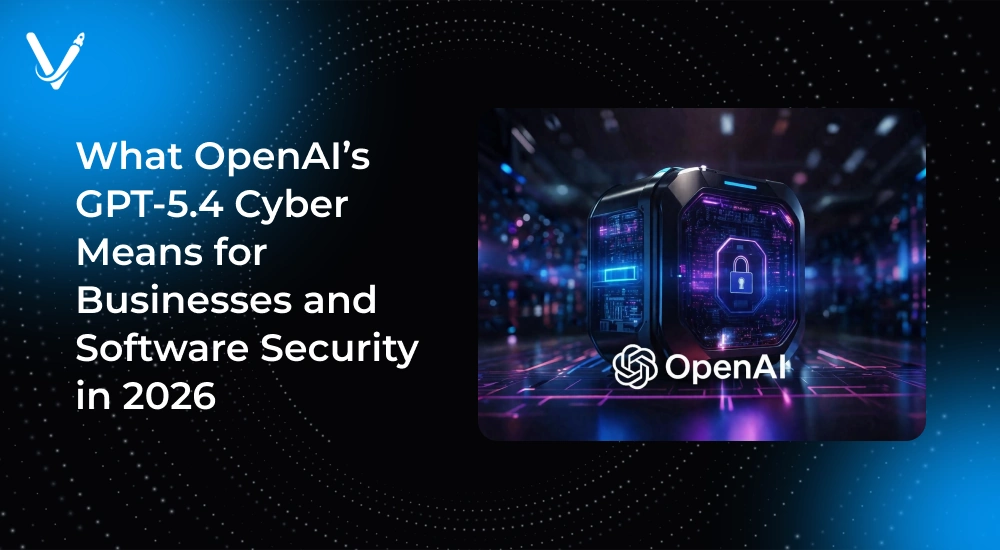
In this context, OpenAI’s GPT-5.4-Cyber marks a significant shift. It is not just another model update. It represents a move toward AI systems that can actively identify software vulnerabilities before attackers do. For businesses, this changes how security is approached, funded, and executed in 2026.
What is GPT-5.4-Cyber?
GPT-5.4-Cyber is a specialized AI model designed for cybersecurity tasks, particularly AI vulnerability detection. Instead of generating content or assisting with coding alone, it focuses on scanning systems, identifying flaws, and suggesting fixes in near real time.
At a high level, the model works by analyzing codebases, system configurations, and application behaviors. It identifies patterns that indicate security weaknesses, including those that may not be obvious to human developers or traditional tools. This makes it a powerful addition to modern AI in software security strategies.
Unlike earlier tools, it is designed to operate with fewer restrictions in controlled environments. This allows it to simulate attacker behavior more effectively, helping organizations detect vulnerabilities before they are exploited.
Why This Changes Cybersecurity
From Reactive to Proactive Security
Traditional cybersecurity has been largely reactive. Teams respond to incidents, patch vulnerabilities after discovery, and rely on periodic testing. GPT-5.4-Cyber shifts this model toward continuous, proactive defense.
Instead of waiting for alerts or breaches, businesses can now identify risks during development and deployment. This reduces the window of exposure and lowers the chances of costly incidents. It also aligns security more closely with development workflows.
The Rise of AI vs AI Security
A new reality is emerging where both attackers and defenders use AI. Hackers can automate reconnaissance and exploit discovery, while defenders deploy systems like GPT-5.4-Cyber to counter those efforts.
This creates a dynamic environment where speed and intelligence matter more than ever. Organizations that adopt AI cybersecurity tools early gain a significant advantage, as they can detect and fix vulnerabilities faster than traditional methods allow.
Key Cybersecurity Trends in 2026
Cybersecurity in 2026 is defined by automation, scale, and intelligence. Several trends highlight why models like GPT-5.4-Cyber are gaining attention.
Global cybercrime costs are projected to exceed $10 trillion annually, driven by ransomware, data breaches, and supply chain attacks. At the same time, enterprises are increasing their cybersecurity budgets, with many allocating over 10% of IT spending to security initiatives.
Another major trend is the adoption of enterprise cybersecurity solutions powered by AI. Organizations are moving away from isolated tools and toward integrated platforms that provide continuous monitoring and automated response.
Key developments shaping cybersecurity trends 2026 include:
- Increased use of AI for threat detection and response
- Growing reliance on automation in DevSecOps pipelines
- Expansion of attack surfaces due to cloud and API ecosystems
- Rising demand for real-time vulnerability scanning
- Stronger regulatory pressure on data protection and risk management
These trends make it clear that manual processes alone are no longer sufficient. AI-driven systems are becoming essential for maintaining security at scale.
Business Impact of GPT-5.4-Cyber
For businesses, the introduction of GPT-5.4-Cyber is not just a technical upgrade. It has direct implications for cost, efficiency, and risk management.
Improved Efficiency and Speed
AI can analyze code and systems much faster than human teams. Tasks that once took days or weeks can now be completed in hours. This accelerates development cycles while maintaining strong security standards.
Cost Reduction Over Time
While implementing advanced AI tools requires investment, the long-term savings can be significant. Early detection of vulnerabilities reduces the cost of fixing issues later in production, where remediation is often more expensive.
Better Risk Management
With continuous AI vulnerability detection, businesses gain better visibility into their security posture. This allows them to prioritize critical issues and allocate resources more effectively.
Competitive Advantage
Companies that integrate AI in software security can deliver more secure products. This builds trust with customers and partners, which is increasingly important in industries where data protection is critical.
Risks and Concerns
Despite its advantages, GPT-5.4-Cyber also raises important concerns. The same capabilities that help defenders can potentially be misused by attackers.
Misuse by Hackers
If similar tools become widely accessible without safeguards, attackers could use them to discover vulnerabilities at scale. This could increase the speed and sophistication of cyberattacks.
Regulatory and Ethical Challenges
Governments and regulators are paying close attention to AI-driven security tools. There is growing pressure to ensure that these systems are used responsibly and do not introduce new risks.
Organizations may need to comply with stricter guidelines around data handling, model usage, and security practices. This adds complexity but also encourages more structured and secure adoption.
Comparison with Other AI Models
GPT-5.4-Cyber is not the only model in this space. Competitors like Anthropic’s Mythos have also introduced AI systems focused on cybersecurity.
While both models aim to detect vulnerabilities, their approaches may differ in terms of training data, access controls, and deployment strategies. GPT-5.4-Cyber’s limited release through a trusted access program suggests a cautious approach to managing risk.
This controlled rollout indicates that the technology is powerful but requires careful handling. It also highlights the competitive race among AI companies to lead in AI cybersecurity innovation.
What Businesses Should Do Now
Organizations do not need to wait for full access to GPT-5.4-Cyber to start preparing. There are practical steps that can be taken today to align with this shift.
- Integrate AI tools into DevSecOps workflows to enable continuous security testing
- Invest in training teams on AI-driven security practices and tools
- Conduct regular security audits with a focus on automation and scalability
- Prioritize high-risk areas such as APIs, cloud infrastructure, and third-party integrations
- Collaborate with cybersecurity partners to adopt advanced enterprise cybersecurity solutions
These steps help businesses build a foundation that supports AI-driven security. As tools like GPT-5.4-Cyber become more accessible, organizations will be better positioned to adopt them effectively.
Future of AI in Cybersecurity
The next three to five years will likely see rapid advancements in AI cybersecurity. Models will become more accurate, faster, and easier to integrate into existing systems.
One key development will be the rise of autonomous security systems. These systems will not only detect vulnerabilities but also fix them automatically, reducing the need for manual intervention.
Another trend is the integration of AI across the entire software lifecycle. From design to deployment, security will be embedded at every stage, supported by intelligent systems that continuously monitor and improve code quality.
At the same time, collaboration between governments, enterprises, and AI companies will become more important. Shared standards and frameworks will help ensure that these technologies are used safely and effectively.
Conclusion
GPT-5.4-Cyber represents a turning point in how businesses approach software security. It shifts the focus from reactive defense to proactive, intelligent protection. In a world where threats are evolving rapidly, this shift is not optional.
Organizations that embrace AI in software security will be better equipped to handle modern risks. They will also gain efficiency, reduce costs, and build stronger trust with their customers.
The challenge lies in balancing innovation with responsibility. As AI tools become more powerful, businesses must ensure they are used ethically and securely. Those who get this balance right will lead the next phase of cybersecurity.
If you're ready to strengthen your software security with AI-driven solutions, Vasundhara Infitech can help you implement advanced, scalable cybersecurity systems tailored to your business needs. Connect with our experts to build secure, future-ready applications.






 Apr 16, 2026