web development
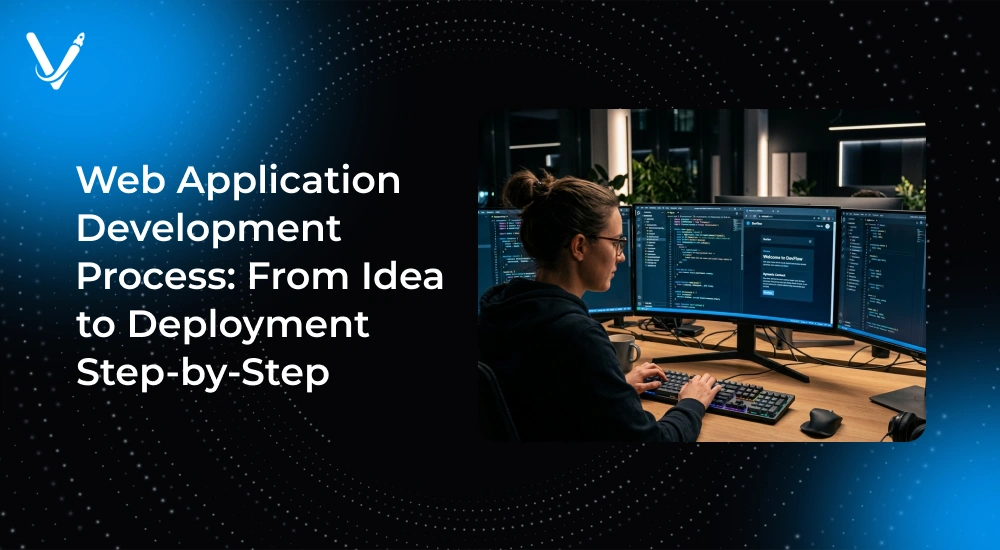
Web Application Development Process: From Idea to Deployment Step-by-Step

 Apr 22, 2026







Many businesses start with a strong idea but struggle when it comes to execution. Projects often fail due to unclear requirements, poor planning, or unexpected costs during development. Without a clear process, even a good idea can turn into a delayed or unsuccessful product.
Understanding the web application development process helps avoid these challenges. It gives structure to the project, reduces risks, and ensures that each step is aligned with business goals. A well-defined approach makes the journey from idea to deployment smoother and more predictable.
The web application development process refers to the series of steps involved in building a web-based application, from initial concept to final deployment. It includes planning, designing, developing, testing, and maintaining the application.
The process of web application development is not just about coding. It involves understanding user needs, choosing the right technologies, and ensuring that the application performs well under different conditions. Understanding the key features and business benefits of custom web application development can help businesses make smarter decisions before they even begin.
A structured process ensures that every stage is handled properly. This reduces errors, improves efficiency, and leads to better results.
A structured approach is essential for successful development. It helps businesses manage complexity and avoid common mistakes.
One of the main benefits is risk reduction. Clear planning and defined steps prevent unexpected issues during development.
Efficiency improves when teams follow a structured process. Tasks are organized, and progress is easier to track.
Scalability is another advantage. A well-planned application can grow with the business without major changes. This is especially important for long-term success.
The web application development process flow typically includes several stages that guide the project from idea to launch.
It begins with idea validation and requirement analysis. This ensures that the concept is feasible and aligned with market needs.
The next stages include planning, design, development, testing, and deployment. Each stage builds on the previous one, creating a clear path forward.
Finally, maintenance and updates ensure that the application continues to perform well after launch. This complete flow helps businesses manage development effectively.
The first step is to validate the idea. This involves understanding the problem the application will solve and identifying the target audience.
Market research plays a key role here. Businesses need to analyze competitors, user needs, and potential demand.
Clear requirements help define the scope of the project. This ensures that development starts with a strong foundation.
Planning involves defining the project scope, timeline, and resources. It also includes selecting the right technology stack.
A clear strategy ensures that the project stays on track. It helps teams understand their roles and responsibilities. Our innovation consulting services can help businesses define their strategy before writing a single line of code.
Proper planning reduces delays and improves efficiency throughout the development process.
Design focuses on how the application looks and feels. It includes creating wireframes and defining user journeys.
A good design improves usability and ensures that users can navigate the application easily. It also enhances user satisfaction. Globally recognized frameworks like Nielsen Norman Group's UI/UX usability heuristics offer proven principles for creating interfaces that truly work for users. Professional prototyping and UI/UX services translate these principles into intuitive, user-centered designs aligned with your business goals.
UI and UX design are critical for creating a positive first impression.
The development phase is where the actual coding takes place. It includes both frontend and backend development.
Frontend development focuses on the user interface, while backend development handles data processing and logic. Developers looking to build strong web foundations often reference MDN Web Docs, the industry-standard resource for modern web technologies and best practices.
This stage also connects with the mobile app development process, ensuring that the application works smoothly across devices.
Testing ensures that the application works as expected. It involves identifying and fixing bugs before launch.
Performance testing checks how the application behaves under different conditions. This is important for scalability.
Professional quality assurance services ensure that the final product meets both business and user requirements, catching issues before they reach real users.
Deployment is the process of launching the application. It involves setting up servers, hosting, and infrastructure.
A smooth deployment ensures that users can access the application without issues. Leveraging DevOps and cloud hosting solutions is essential for a reliable, scalable, and secure launch.
After deployment, the application requires continuous monitoring and updates. This ensures that it remains secure and efficient.
Regular updates help improve performance and add new features. Maintenance is a key part of the web application development process steps.
Some businesses require complex applications to manage intricate workflows. Web application development for intricate business processes focuses on handling these complexities. Custom solutions are built to meet unique operational requirements — explore the features and benefits of custom web application development to understand what sets tailored solutions apart from off-the-shelf products.
These applications often include multiple integrations, data processing systems, and user roles. Custom solutions are necessary to meet specific requirements.
Integration with existing systems such as CRM and ERP is also important. This ensures smooth operations and better efficiency.
Speed is important, especially for startups and growing businesses. Accelerating the web application development process helps reduce time to market.
Explore our dedicated MVP and product development services to launch faster without compromising quality.
Many projects fail due to avoidable mistakes. Understanding these issues can improve outcomes.
Poor planning is one of the most common problems. Without clear requirements, development becomes inefficient.
Ignoring scalability can lead to performance issues as the application grows. Businesses should plan for future expansion. Read more about web application development for startups and how to avoid common pitfalls from the beginning.
Weak testing also affects quality. Bugs and performance issues can damage user experience and reputation.
Avoiding these mistakes helps ensure a successful project.
Web application development is evolving with new technologies and trends.
AI integration is becoming more common. Applications are using AI to improve user experience and automate tasks.
Cloud-native apps are gaining popularity. They offer better scalability and flexibility, supported by modern DevOps and cloud hosting infrastructure.
Progressive web apps are also growing rapidly. They provide a mobile-like experience while running on web browsers. The MDN Progressive Web Apps guide is an excellent technical reference for understanding how PWAs work under the hood. Learn more about why your business needs a progressive web app and how they are shaping the future of digital products.
These trends are shaping the future of development and improving efficiency.
The web application development process is essential for turning ideas into successful digital products. A structured approach ensures that each stage is handled effectively, from planning to deployment.
By following the right process, businesses can reduce risks, improve efficiency, and build scalable applications. Proper planning and execution make a significant difference in project success.
If you are planning to build a web application, working with an experienced partner like Vasundhara Infotech can help you navigate the process smoothly. Our team focuses on strategy, performance, and scalability to deliver reliable solutions. Connect with us today to bring your idea to life.
Copyright © 2026 Vasundhara Infotech LLP. All Rights Reserved.