


trending blog
Anthropic drops workplace AI agents directly inside Slack

 Jun 24, 2026





By the end of 2026, 40 percent of enterprise apps will include task-specific AI agents, up from less than 5 percent a year earlier. That forecast comes from Gartner, shared in recent coverage of the launch. On June 23, 2026, Anthropic gave that trend a big push. It launched Claude Tag, an AI agent that lives right inside Slack.
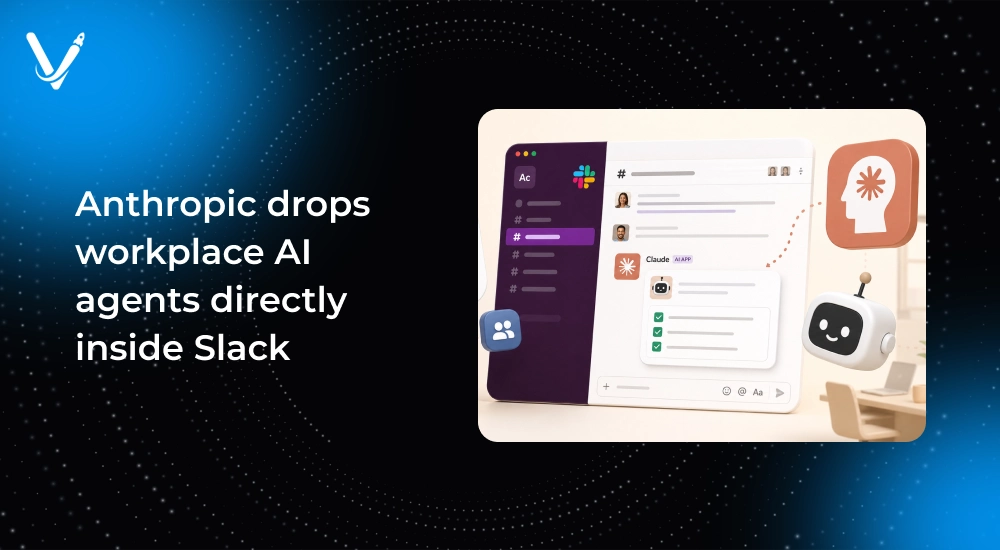
This is not a chatbot in a side window. It is a shared teammate in your channels. Anyone can type @Claude, hand off a task, and get the work done in the thread. It marks one of the boldest moves yet in the world of Anthropic AI Agents.
In this guide, we break down what Claude Tag is, how it works, and what it means for your team. We also cover the risks and how to get ready. If you want help putting AI agents to work, our AI development services team builds them for real businesses.
Anthropic launched Claude Tag on June 23, 2026, and it is already core to how the company works. Anthropic says about 65 percent of its product team's code is now made with an internal version of the tool. That is a strong vote of trust in its own product.
Claude Tag is an AI agent that sits inside Slack. It replaces the older Claude in Slack app. It runs on Claude Opus 4.8, Anthropic's newest model. Right now it is in beta for Claude Enterprise and Team customers.
The big idea is simple. You tag @Claude in a channel, just like you would tag a coworker. You give it a task in plain words. It does the work and posts the result back in the thread.
Here is what makes it stand out:
• It is multiplayer. One shared Claude works for the whole channel, not just one person.
• It has memory. It keeps context from past chats in that channel.
• It can act on its own. An ambient mode lets it flag updates and follow up on stale tasks.
• It connects to tools. With the right access, it can pull data, run analyses, and write code.
These Anthropic AI Agents are built to feel like a real teammate, not a pop-up bot. Here is how the parts fit together.
You type @Claude and describe the task. Claude breaks it into steps. It works through each one. Then it posts what it made in the Slack thread. This is the heart of the Slack AI Assistant for Teams model.
Old chatbots talked to one person at a time. Claude Tag is shared. The whole channel sees its work. Anyone can pick up where a teammate left off. Slack's general manager, Rob Seaman, described the shift as making AI multiplayer.
Claude Tag remembers the channel's past work. You do not have to explain a project again and again. This makes it a stronger AI Collaboration Tool for Enterprises over time.
Turn on ambient mode and Claude acts on its own. It surfaces updates from other tools. It follows up on tasks that stalled. It nudges teams about things that slipped. This is real Workplace AI Automation, not just chat.
With admin approval, Claude can reach your tools, data, and codebases. That lets it run real Business Process Automation AI tasks, like pulling sales metrics or writing pull requests.
Most enterprise software will soon ship with AI agents built in. The move from chatbots to agents is the biggest change in workplace tech in years.
For years, AI at work meant a chat window on the side. You asked. It answered. You copied the result somewhere else. Claude Tag changes that. The agent works where the team already works.
The gains for Enterprise AI Agents are clear:
• Less app switching. Work stays in Slack.
• Faster handoffs. Tasks move between people and AI with no friction.
• Shared context. The whole team sees the same AI work.
• Round-the-clock help. Claude can run tasks for hours or days on its own.
These are the gains that make Workplace AI Automation Tools so popular. For teams that want a build made for their own needs, see our guide to custom AI development.
Claude Tag is a clear step up from the old Claude in Slack app. The table below shows the main changes.

Claude Tag can read channels, hold memory, and act on its own. That is useful. It also raises real questions about data, cost, and control. Here is what to watch.
Admins decide which channels, tools, and data each Claude can touch. Anthropic says instances stay siloed. For example, legal data should not cross into an engineering channel. Set these limits with care.
Ambient mode means Claude works even when no one asks. That can change your token use and your bill. Set spend limits during setup. Watch usage closely at first.
When one AI holds your team's memory and context, switching gets harder. Plan for that. Keep your own records of key decisions and data.
Do not ship AI output blind. Review it, just like you would a coworker's draft. This is the core of safe AI compliance. Trust what you can check, not what you are promised.
A simple setup checklist helps:
1. Pair Claude with Slack.
2. Connect only approved tools.
3. Set clear spend limits.
4. Test in a private channel first.
5. Roll out channel by channel.
The agentic AI market is set to grow from about 9.14 billion dollars in 2026 to 139 billion dollars by 2034, per Fortune Business Insights, as reported in launch coverage. Claude Tag is one more sign of how fast this space is moving.
Anthropic is not alone. Salesforce, which owns Slack, added dozens of new agent features to Slackbot earlier this year. OpenAI launched its own workspace agents. Microsoft keeps building Copilot into work tools. The race for the workplace is on.
For business leaders, the message is clear. AI agents are moving from nice to have to normal. The teams that learn to work with them now will lead later. These Enterprise AI Solutions are fast becoming part of daily work.
You do not need to rush. But you do need a plan. Follow these steps to roll out AI agents the safe way.
6. Pick one team to start. Choose a channel with clear, repeated tasks.
7. Set rules first. Decide what data and tools the agent can use.
8. Start small. Test on low-risk work before you scale.
9. Train your people. Show them how to tag and guide the agent.
10. Measure results. Track time saved and quality, not just hype.
11. Scale with care. Add channels once you trust the setup.
If you want help building or rolling out AI Workflow Automation Software, a skilled partner can speed things up and lower risk. See how we build intelligent AI assistants that fit the way your team works.
Workplace AI agents are becoming a standard part of how modern teams get work done. With Anthropic's Claude Tag now living inside Slack alongside tools from Salesforce, OpenAI, and Microsoft, businesses have more ways than ever to put AI to work, whether it's delegating tasks, automating workflows, sharing context across a team, or acting on its own in the background.
The key is not chasing the newest tool, it's choosing the right one for your team's workflow, data rules, and goals. Set clear governance, start with low-risk tasks, and focus on real productivity gains over hype. Teams that pair smart AI agents with strong rules and good judgment will pull ahead in 2026 and beyond.
Ready to put AI agents to work for your business? Vasundhara Infotech helps startups and enterprises build custom AI agents, workflow automation, and intelligent business tools. Explore our AI development services or Contact Us for a free consultation and project assessment.