More than three out of four developers now use AI to help them write code. That number comes from the Stack Overflow 2024 Developer Survey, and it keeps climbing. Coding has changed for good. The real question is no longer if you use an AI coding assistant. It is which one.
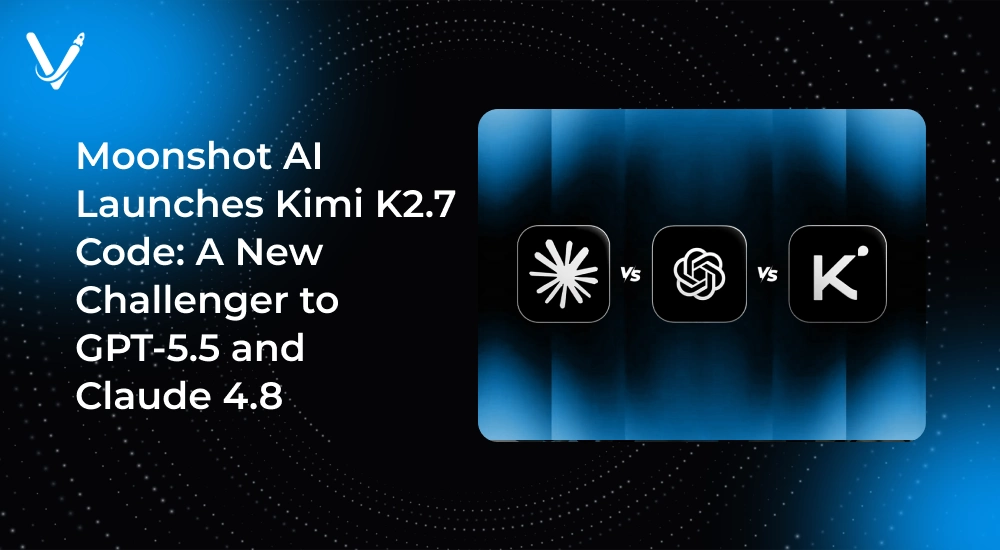
This week, Moonshot AI added a strong new name to that list. Its model, Kimi K2.7 Code, is built to take on the biggest tools in the market: GPT-5.5 from OpenAI and Claude 4.8 from Anthropic. This is some of the most watched large language model news of 2026.
In this guide, we break down what Kimi K2.7 Code is, how it compares, and how to pick the best AI code generator for your own team. If you want help putting any of these tools to work, our AI development services team builds with them every day.
What Is Kimi K2.7 Code?
The AI code tools market is growing fast. McKinsey estimates that generative AI could add up to $4.4 trillion in value across business functions, with software engineering among the top gains.
Kimi K2.7 Code is the newest coding model from Moonshot AI, a research lab based in China. Moonshot is known for the Kimi family of models, which built a strong name for long context and agentic tasks. The Code version is tuned for one job: writing, fixing, and explaining software.
In short, it is built to be an AI programming assistant first. Most large models can write code. A code-tuned model aims to do it better, with fewer errors and cleaner output.
What it is built to do well:
• Write code in many languages
• Read and explain large codebases
• Fix bugs and suggest tests
• Work as an agent across many steps
One note before we go on. Model specs change often, and vendors push new versions fast. Always check the official release notes for the latest numbers before you make a buying choice. We explain why that habit matters in the AI compliance section below.
In one GitHub study, developers finished a coding task up to 55% faster when they used an AI assistant. That kind of speed is why almost every team now tests these tools.
AI-based software development tools have moved from nice to have to core kit. They help small teams ship like big ones. They cut the time spent on dull tasks. They free engineers to focus on hard problems. For a closer look at real use cases, see our guide to custom AI development.
Here is what good AI tools for developers can do today:
• Turn plain English into working code
• Spot bugs before they reach users
• Write unit tests in seconds
• Document code as it is written
• Review pull requests and flag risks
The payoff is real. The gap between tools is real too. Picking the wrong one can slow you down. That is why an honest AI model comparison matters.
Kimi K2.7 Code vs GPT-5.5 vs Claude 4.8
About 62% of developers already use AI tools in their daily work, per Stack Overflow. With three strong options now on the table, the choice gets harder.
Here is an honest, category-based AI model comparison. Each of these is a top-tier model. They differ in focus more than in raw skill.
Where Kimi K2.7 Code stands out
The Kimi line has long handled very large inputs well. For coding, that helps when you feed it a whole repo at once. Its more open roots also appeal to teams that want extra control. If you work on big, complex projects, it is worth a test.
Where GPT-5.5 stands out
GPT-5.5 sits inside one of the largest tool ecosystems in tech. If your stack already uses OpenAI, it fits with little friction. It is a safe, broad pick for many teams.
Where Claude 4.8 stands out
Claude 4.8 has a strong name for clean, readable code and careful reasoning. Many engineers like it for reviews and tricky refactors. It tends to explain its work well, which helps junior teams learn faster.
What Makes the Best AI Coding Assistant?
Stack Overflow found that 76% of developers are using or plan to use AI tools. With that many users, the bar for quality is high. So what should you look for in the best AI coding assistant?
Accuracy
The tool should write code that runs. It should make few mistakes and admit what it is unsure about.
Readability
Good code is easy to read. The best AI programming assistant writes clear code that humans can maintain.
Context size
A large context window lets the tool read more of your code at once. This helps it give answers that fit your real project, not generic snippets.
Speed and cost
Fast answers keep you in flow. But watch the price. Heavy use adds up. Match the tool to your budget. If you want a partner to scope and build your product the right way, our team can help.
Safety and trust
The tool should respect your data. It should not leak code. It should flag risky output. We cover this next.
AI Compliance and Safe Use of Coding AI
AI tools are powerful. They also bring real risk. Smart teams set rules before they roll these tools out. That is what AI compliance means in plain terms.
Why it matters:
• AI can produce wrong code that looks right
• It can copy patterns that raise license issues
• It can expose private data if used the wrong way
• Some output may not meet legal or industry rules
Simple steps to stay safe:
1. Review all AI code. Never ship it blind.
2. Check licenses before you reuse generated code.
3. Keep secret keys and private data out of prompts.
4. Confirm specs and claims against official sources.
5. Train your team on safe, ethical use.
That last point links back to our earlier note. We did not list exact benchmark scores for these models on purpose. Numbers change with each release, and stale figures mislead readers. Honest content checks its sources. So should your team.
How to Choose the Best LLM for Coding in 2026
With AI now used by most developers, the cost of a poor tool choice is higher than ever. So what LLM is best for coding? The honest answer is that it depends on your work.
Here is a simple way to choose:
6. List your top tasks. Big repos? Quick scripts? Code review?
7. Pick two or three models to test. Kimi K2.7 Code, GPT-5.5, and Claude 4.8 make a strong short list.
8. Run the same real tasks through each one.
9. Score them on accuracy, speed, and clarity.
10. Check the cost at your real usage level.
11. Choose the one that fits your team, not the hype.
There is no single best LLM for coding in 2026 for everyone. The best AI code generator for you is the one that fits your stack, your budget, and your rules.
Final Thoughts
AI coding tools are becoming a standard part of modern software development. With Kimi K2.7 Code entering the market alongside GPT-5.5 and Claude 4.8, development teams now have more choices than ever. Each model offers different strengths, whether it's handling large codebases, supporting agentic workflows, providing high-quality code reviews, or integrating into existing development ecosystems.
The key is not finding the most popular model it's finding the one that fits your team's workflow, budget, and technical requirements. Test these tools against real projects, establish clear AI usage guidelines, and focus on measurable productivity gains rather than hype. Teams that combine the right AI tools with strong engineering practices will have a significant advantage in 2026 and beyond.
Ready to build AI-powered software faster? Vasundhara Infotech helps startups and enterprises develop custom AI applications, AI agents, generative AI solutions, and intelligent software products. Explore our AI development services or Contact Us for a free consultation and project assessment.





 Jun 23, 2026