


AI/ML
Diet and Nutrition App Development: Features, Cost and Process Guide (2026)

 Jun 4, 2026





Diet and nutrition app development is the process of building a mobile or web app that helps people log meals, track calories and nutrients, and reach health goals. It blends food data, user tracking, and often AI to give simple, useful guidance.
If you run a startup or lead a tech team, this guide is for you. It covers features, cost, the build process, and the rules you must follow. We keep it plain and practical. Many teams now add smart features through AI-powered app development to make tracking easier and more personal.
The goal here is clarity. You will learn what to build, what it costs, and how to ship it without surprises. We also cover privacy and compliance, since health data needs care.
The market is growing fast, and demand is real. Diet and nutrition app development serves a clear and rising need.
According to Grand View Research, the global diet and nutrition apps market was worth about 2.14 billion dollars in 2024. It is set to reach 4.56 billion dollars by 2030, growing at 13.4 percent each year. North America held the largest share in 2024.
People want help with food choices. Data from Statista shows health and fitness apps passed an estimated 3.6 billion downloads in 2024. That is a huge, ready audience. A well-built app can reach users who already track their habits every day.
For founders, this means strong demand and room to grow. You can start small and scale as users join.
A good diet and nutrition app needs a core set of features that make tracking fast and simple. Users stay when logging takes seconds, not minutes.

Here are the features most apps need:
• Food and meal logging. Let users add meals by search, voice, or favorites. Speed matters most here.
• Barcode scanning. Scan packaged food to pull nutrition data at once. This saves time and cuts errors.
• Calorie and macro tracking. Show calories, protein, carbs, and fat in clear charts. Keep the numbers easy to read.
• Meal planning. Offer plans based on goals like weight loss or muscle gain. Add recipes and grocery lists.
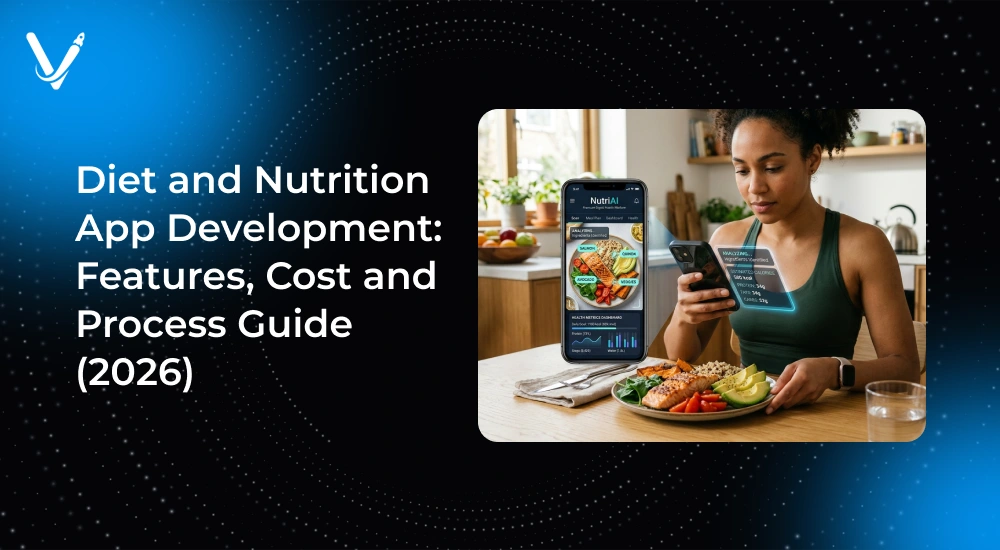
• AI food recognition. Let users snap a photo to log a meal. The app names the food and estimates portions.
• Progress tracking. Track weight, water, steps, and trends over time. Simple graphs keep users motivated.
• Wearable and health integrations. Sync with Apple Health, Google Fit, and fitness bands. This pulls in steps and activity data.
• Reminders and goals. Send gentle nudges to log meals and drink water. Let users set personal targets.
These features form the base of strong diet and nutrition tracking app development. You can add more later, but start with the core.
AI makes a nutrition app smarter and more personal. It turns raw data into advice users can act on. This is the heart of AI diet and nutrition app development.
Here are the main AI use cases:
• Food recognition from photos. The app uses computer vision to spot foods in an image. It logs the meal and estimates calories. Users skip manual entry.
• Personalized meal plans. AI looks at goals, habits, and past meals. Then it builds a plan that fits each user. Plans adjust as habits change.
• Predictive tracking. The app learns patterns over time. It can warn users before they go off track. It can also suggest better swaps.
• Smart coaching. A chat assistant answers food questions in plain words. It can guide users through tough days.
AI raises the value of your app, but it adds cost and care. You need clean data and clear limits. Always tell users when AI gives an estimate, not a fact. Good AI diet and nutrition app development keeps the human in control.
The system development methodology for a mobile nutrition app is a step-by-step process that takes your idea from plan to launch. Most teams use an agile approach with short, repeated cycles.
Here are the main stages:
• Discovery. Define goals, users, and scope. List must-have features. Pick your platform and budget.
• Design. Build wireframes and a clean user flow. Test the design with real users. Keep screens simple.
• Development. Code the front end and back end. Set up the food database and APIs. Add AI features if needed.
• Testing. Check for bugs, speed, and security. Test on many devices. Fix issues before launch.
• Launch. Ship to the App Store and Google Play. Set up tracking and support. Watch the first user reviews.
• Iteration. Use data and feedback to improve. Add features users ask for. Repeat the cycle often.
A clear system development methodology for mobile nutrition app projects keeps the build on track. Short cycles cut risk and waste. You ship faster and learn as you go.
Nutrition app development cost depends on features, platform, and how much AI you add. A simple app costs less. An AI-rich app costs more.

Here are typical ranges for diet and nutrition tracking mobile app development:
Many factors move the price. These include the number of platforms, the size of the food database, and design depth. Ongoing costs like servers, updates, and support also add up.
To control nutrition app development cost, start with an MVP. Launch the core, learn from users, then grow. Smart planning early keeps diet nutrition tracking app development affordable. A clear scope is the best way to avoid overspending.
Developing a diet and nutrition app works best as a clear, ordered plan. Each step builds on the last. Here is how to develop a diet and nutrition app from start to finish.
1. Set your goal and audience. Decide who the app serves and why. Pick one main problem to solve first.
2. List core features. Choose a small set for your first version. Logging, tracking, and goals are a good start.
3. Choose your tech and platform. Decide on iOS, Android, or both. Pick a food data source and a tech stack.
4. Design the experience. Map screens and flows. Make logging fast and clear.
5. Build the MVP. Code the core features. Connect the food database and any APIs.
6. Test well. Check speed, bugs, and security. Test with real users.
7. Launch and learn. Release the app. Watch usage and reviews. Plan your next update.
Following these steps makes diet nutrition app development calm and clear. You stay focused on value, not extra features.
Nutrition apps handle personal health data, so privacy rules apply. You must protect user data and follow the law in each market you serve. This is a key part of safe diet and nutrition app development.
Here are the main rules to know:
The safe path is simple. Collect only what you need. Encrypt data in transit and at rest. Get clear consent. Let users control and delete their data. Build privacy in from day one.
Choosing the right nutrition app development company can make or break your project. The best partner brings skill, clear process, and honest pricing.
Here is what to look for:
A good partner offers full nutrition app development services from idea to launch and beyond. Take time to choose well. The right team saves money and stress.