



AI/ML
Polaroid’s New Anti-AI Campaign Is Going Viral: Here’s Why It Matters

 Jun 30, 2026





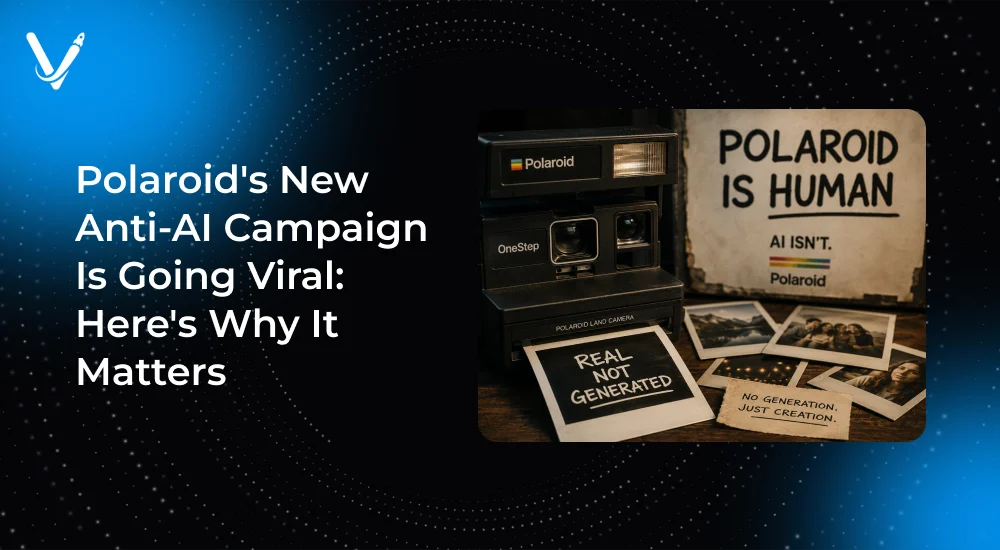
In June 2026, Polaroid put a billboard on Coney Island Beach with a sharp jab at AI data centers. It went viral fast. The ad was part of a wider anti-AI campaign that has people talking around the world.
Polaroid, the 89-year-old camera brand, is betting on something simple. It is selling real, human moments over AI-made content. The Polaroid anti AI campaign taps into a growing mood. Many people feel tired of AI, and Polaroid is giving that feeling a voice.
In this guide, we break down what the campaign is, why it went viral, and what your brand can learn from it. We also look at the other side: how to use AI in marketing the right way. If you want help building smart digital experiences, our AI development services team can guide you.
Polaroid is one of a growing group of brands using anti-AI marketing to stand out. Its 2026 push is one of the boldest yet.
The campaign is called "The Best of Summer Is Analog." It launched in June 2026 to promote the new Polaroid Go Generation 3, the brand’s smallest instant camera yet.
The star of the campaign is a billboard at Coney Island Beach in New York. It reads, "Go jump in some water before the data centers drink it all up." The line points at how AI data centers use large amounts of water and power.
Polaroid ran similar ads in London, near tube stations and busy streets. Other lines play on being tracked, on blue light, and on recording every moment instead of living it.
This is a full 360-degree campaign, not just one billboard.

Here is what it includes:
• Billboards and fly posters in New York and London
• Phone-free walking tours in Paris, Tokyo, and London
• A mailed Polaroid postcard at the end of each tour
• Influencers sent cameras and asked to go offline
• Paid search, display, social, and creator ads aimed at Gen Z
It builds on Polaroid’s 2025 campaign, "The Camera for an Analog Life," which launched the Polaroid Flip and joked that AI cannot generate the feel of sand between your toes. Other lines remind people that real stories beat reels, and that no one ever wished they had spent more time on their phone.
There is real weight behind the message. Polaroid was founded in 1937 and helped invent instant photography. The brand nearly vanished when it stopped making film in 2008, before fans saved the last factory and brought it back. So when Polaroid champions real, analog moments, it speaks from its roots. This is a clear Polaroid marketing strategy: stand for real life in a digital world.
Research by Stackla found that about 88 percent of people say authenticity matters when they choose which brands to support. Polaroid leaned right into that need.
The campaign struck a nerve because it named a real feeling. Many people, and Gen Z most of all, feel worn out by AI. Polaroid put that feeling on a billboard, and people felt seen.
Here is why it spread so fast:
• It named a real feeling: AI fatigue
• It did not lecture or shame anyone
• It tied to a real, physical product
• It used a hot topic: data centers and water
• It placed ads where tech culture lives
That mix made it a social media viral campaign case study in real time. People shared it because it said what they were already thinking. That is the heart of any viral marketing campaign 2026 will remember.
Polaroid is not alone. More brands now use an anti AI advertising campaign to stand apart from the crowd.
The reason is simple. AI content is everywhere now. A lot of it feels flat or fake. Some AI ads have even drawn real backlash for looking lazy or off-brand. So some companies go the other way. They sell "real" and "human" as the premium choice.
This is one of the clearest digital marketing trends 2026 has shown so far. The creative industry AI impact cuts both ways. AI makes content cheap and fast. But it also makes truly human, real work more rare, and more valued. AI content backlash marketing is now a real strategy, not a fringe idea.
Strong campaigns are rarely luck. Polaroid followed a clear playbook. Here is the breakdown.
Polaroid picked a side and owned it. It did not sit on the fence. That kind of bold, clear stance is rare, and it gets noticed.
Polaroid placed ads next to Apple Stores and Google offices, and in busy travel spots. The contrast did the talking. This is smart AI vs photography marketing, where the setting adds to the message.
Every ad led back to a real camera you can buy. The message and the product matched. That link kept the campaign from feeling like empty noise. See how real products and tech come together in our guide to custom AI development.
Polaroid asked why it should exist at all in an AI era, then built from there. Its creative director framed people as analog creatures who drift from real empathy the more they live through algorithms. The campaign spoke to burnout and real connection, not just nostalgia. That is a strong photography brand marketing strategy rooted in real feeling.
You may not sell cameras. But the lessons here work for almost any brand.
• Stand for something real, not just features
• Know how your audience truly feels
• Match your message to a real product or service
• Place your message where it will land hardest
• Be bold, but stay honest

These are the bones of strong brand authenticity marketing. They work for almost any brand awareness campaign examples you might build, in any field.
Here is the twist. Going anti-AI in an ad does not mean AI is bad. Most brands, Polaroid included, still use digital tools every day.
The real lesson is about honesty. If you do use AI in your marketing, use it the right way. That is what AI compliance means in this space.
• Be honest about AI-made content when it matters
• Do not pass off AI work as fully human if it is not
• Check AI output for facts, tone, and bias
• Follow the rules on data and privacy in your ads
• Keep a human eye on truth and brand voice
Disclosure rules are growing in many regions. Brands that hide their AI use risk a backlash of their own. The safe path is simple. Use AI to help, be honest about it, and keep people in charge of the final call.
Want to use this in your own marketing? Here is a simple path to follow.
1. Find a real feeling your audience shares
2. Pick a clear, honest stance on it
3. Tie that stance to a real product or service
4. Choose bold, fitting places to share it
5. Use AI to help, but stay honest about it
6. Measure shares, reach, and sales, then refine
Start with truth, then build the campaign around it. If you need a tech partner to bring a bold idea to life, our AI chatbot and app development team can help.
Polaroid’s anti-AI campaign is more than a clever billboard. It is a sign of where marketing is heading. As AI content floods the web, "real" and "human" stand out more than ever.
Rather than chase the AI trend, Polaroid pushed against it, and won the spotlight. The campaign worked because it was clear, bold, and true to the brand.
For brands, the key lessons include:
• Stand for a real feeling, not just a product
• Place your message where it will hit home
• Tie every message to something you sell
• Be bold, but always honest
• Use AI as a tool, not a shortcut for trust
At the same time, marketers must use AI with care. Honesty, disclosure, and human oversight stay essential, no matter which side of the AI debate your brand picks.
Authenticity is becoming the most valued thing in marketing. Brands that earn real trust will gain a strong edge in the years ahead.
Want to build authentic digital experiences that stand out? At Vasundhara Infotech, we help brands build custom apps, AI solutions, and digital products that put real people first.