Introduction
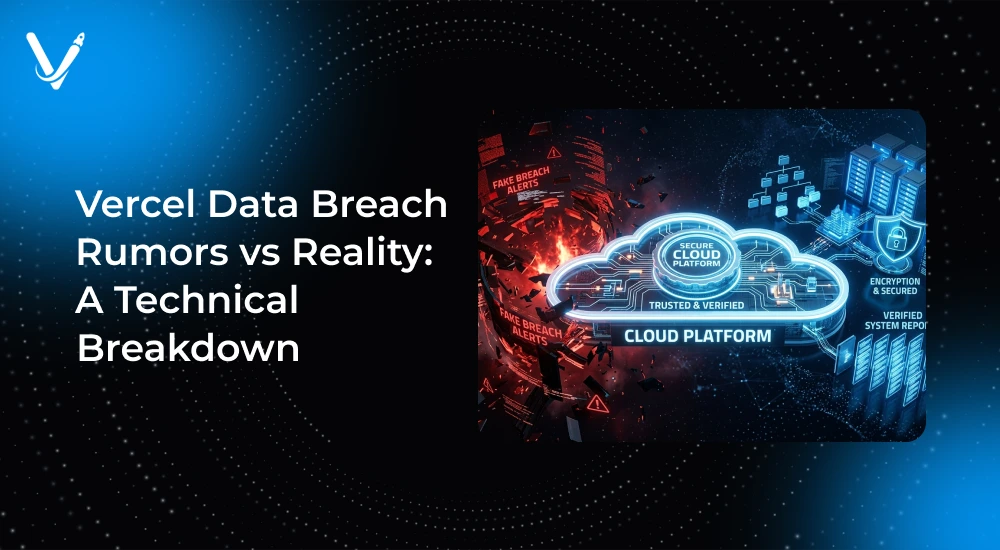
Vercel security incident became a trending topic in April 2026, not because of confirmed large-scale damage, but because of how quickly unverified claims spread online. Social media posts, forum discussions, and dark web screenshots created a narrative that suggested a massive breach, with some even claiming sensitive data was being sold for millions. For developers and founders, the signal quickly got lost in the noise.
This blog takes a different approach. Instead of repeating speculation, it focuses on what is verified, what remains unconfirmed, and what actually matters from a technical and operational perspective. If you are building or running applications on modern cloud platforms, understanding the difference between rumor and reality is critical.
The goal here is simple: provide a clear, technical breakdown of the Vercel breach 2026 situation, assess real risks, and outline practical steps you should take without overreacting or ignoring potential exposure.
What Happened in the Vercel Security Incident
The Vercel security incident refers to a confirmed case of unauthorized access to certain internal systems. The company acknowledged that a limited subset of infrastructure was accessed without permission and initiated an investigation immediately after detection. Services continued to operate normally, and mitigation steps were deployed quickly.
Importantly, the disclosure did not confirm a full-scale data breach affecting all users. There was no official statement indicating that core platform services, production deployments, or widely used frameworks were compromised. Instead, the language pointed toward a contained incident involving internal access.
This distinction matters. In cybersecurity terms, a “security incident” can range from attempted intrusion to partial system access, while a “data breach” implies confirmed exposure of sensitive data. Based on available information, the situation aligns more with controlled internal exposure rather than a widespread external compromise.
Rumors vs Reality
One of the most challenging aspects of this event was the speed at which misinformation spread. Developers searching “is Vercel hacked” encountered conflicting answers, many of which were based on unverified sources.
Rumors That Circulated
Several claims gained traction quickly across forums and social platforms:
- A $2 million dataset allegedly being sold on the dark web
- Full access to developer accounts and deployment systems
- A supply chain attack impacting applications built with modern frameworks
- Exposure of all environment variables and API keys
These claims created urgency and panic, but they lacked confirmation from any official or verifiable source.
Verified Reality
What is actually confirmed presents a much narrower scope:
- Unauthorized access occurred within internal systems
- The impact was limited and contained
- There is no evidence of large-scale data exfiltration
- No confirmation of compromised frameworks or global deployment pipelines
The gap between rumor and reality highlights a common pattern in cybersecurity events. Attackers often exaggerate their claims to increase perceived value, while the real impact is usually more constrained. For technical decision-makers, reacting to facts rather than speculation is essential.
Technical Risk Analysis
Even when an incident appears limited, it is important to analyze potential risks from a technical standpoint. Internal system access, depending on scope, can introduce several layers of exposure.
Access to Tokens and Credentials
If internal tools or dashboards were accessed, there is a possibility that API tokens or service credentials were visible. These tokens can be used to interact with deployment pipelines, third-party integrations, or backend services. However, access does not automatically mean misuse, and no widespread exploitation has been confirmed.
Environment Variable Exposure
Environment variables often contain sensitive data such as database credentials, API keys, and authentication secrets. If these were accessible internally, the risk depends on whether they were encrypted, masked, or restricted by role-based access control. Properly configured systems limit the visibility of such data even within internal environments.
Deployment Integrity
Another theoretical risk involves deployment manipulation. If an attacker gains access to deployment systems, they could attempt to inject malicious code or alter build processes. However, such actions typically leave clear traces in logs and monitoring systems, and no such widespread activity has been reported.
Lateral Movement
In cloud environments, one compromised system can sometimes be used to access others. This is known as lateral movement. The severity of this risk depends on network segmentation, access policies, and zero-trust implementation. Strong isolation significantly reduces the chance of escalation.
Overall, the technical risk exists but appears controlled. There is no indication of systemic compromise across applications or developer ecosystems.
Real Impact on Developers and Startups
For most developers and startups, the immediate impact of the Vercel security incident is minimal. Applications remain operational, and there is no evidence suggesting that user-facing systems were directly affected. However, the incident serves as a reminder of underlying dependencies.
Developers often rely on cloud platforms as trusted infrastructure layers. While these platforms invest heavily in security, no system is completely immune to incidents. The real impact lies in awareness and preparedness rather than disruption.
Startups, in particular, should pay attention to how they manage secrets, access controls, and monitoring. Even if a platform remains secure, weak internal practices can amplify risks. The question is not whether an incident will happen, but how resilient your system is when it does.
From a business perspective, incidents like this can also influence customer trust. Transparent communication and proactive security measures help maintain credibility, especially when working with enterprise clients.
Security Best Practices After the Incident
- Rotate all API keys and access tokens associated with your applications, even if there is no confirmed exposure
- Review and update environment variables to ensure sensitive data is properly secured and not overexposed
- Enable multi-factor authentication across all developer accounts and administrative access points
- Audit deployment logs and access logs for unusual activity or unauthorized changes
- Implement least-privilege access controls to limit what each user or service can access
- Use secret management tools instead of storing credentials directly in code or configuration files
- Monitor third-party integrations and revoke any unused or outdated permissions
Lessons for SaaS and Cloud-Based Businesses
The Vercel breach 2026 situation offers several strategic lessons for SaaS companies and cloud-native businesses. The first is that platform trust should not replace internal security responsibility. Even when using reliable providers, your architecture must be designed with defense in depth.
Second, visibility is critical. Without proper logging and monitoring, identifying unusual behavior becomes difficult. Investing in observability tools allows teams to detect and respond to anomalies faster.
Third, secret management should never be an afterthought. Credentials must be stored securely, rotated regularly, and accessed only when necessary. Modern systems should avoid hardcoding sensitive data altogether.
Finally, incident response readiness is as important as prevention. Teams should have clear protocols for handling security events, including communication plans, access revocation procedures, and system audits. Preparedness reduces both technical risk and reputational damage.
Conclusion
The Vercel security incident is a clear example of how quickly misinformation can spread in the absence of complete information. While the event itself involved unauthorized access to internal systems, the scale and severity have been widely overstated in online discussions.
For developers and businesses, the takeaway is not panic but perspective. Security incidents are part of operating in a complex digital environment. What matters is how systems are designed, how risks are managed, and how quickly teams can respond.
By focusing on verified facts, strengthening internal practices, and maintaining a proactive approach to security, organizations can navigate such situations with confidence. The real advantage lies not in avoiding every incident, but in being prepared for them.
At Vasundhara Infotech, we help startups and enterprises build secure, scalable, and resilient applications with a strong focus on modern cloud security practices. If you are looking to strengthen your application architecture or want an expert review of your current setup, our team can help you identify risks and implement the right safeguards before issues arise.





 Apr 21, 2026