AI/ML
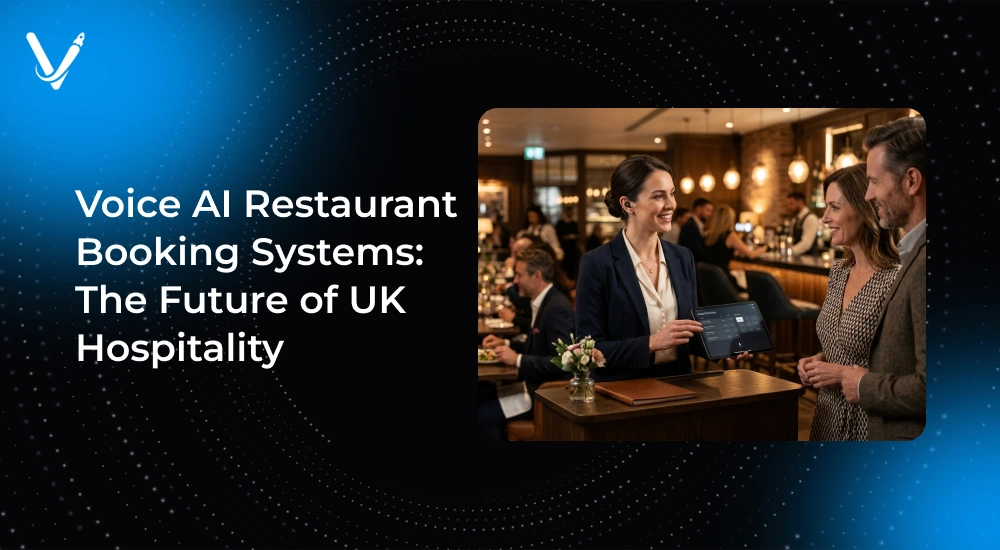
Voice AI Restaurant Booking Systems: The Future of UK Hospitality

 May 21, 2026







No-shows alone drain an estimated £17.6 billion a year from the UK hospitality sector, according to research from hospitality technology firm Zonal. That figure does not even count the bookings restaurants never capture, or the calls that ring out during a Friday rush. For an industry running on thin margins, that is a lot of money walking out the door before a single plate is served.
This is the gap voice AI restaurant booking systems are built to close. They answer every call, take bookings around the clock, and free your team to look after the guests in the room. For UK operators squeezed by rising wages and staff shortages, that is shifting from nice-to-have to survival tool. Here is what it does, what the numbers say, and how to deploy it without breaking UK data law.
Diners book differently now. They expect to reach you the moment the urge to eat out hits, whether that is 11pm on a Tuesday or mid-service on your busiest night.
The phone still matters, though. Many guests prefer to call for larger parties, special occasions, and dietary questions a website cannot answer. Industry research from Slang AI found restaurants miss roughly a third of inbound calls, and around seven in ten of those calls are tied to revenue. About one in five reservations land outside opening hours, when nobody is at the desk.
Add the UK's staffing crunch, with restaurant turnover near 38% in 2025 per UKHospitality, and the maths gets ugly. Fewer hands means fewer people free for the phone, just as demand climbs. That mismatch is pushing operators toward restaurant booking automation that never clocks off.
Most venues juggle bookings across a paper diary, a clunky online widget, and a phone that rings at the worst moments. Each tool fixes one slice of the problem and ignores the rest.
Here is where it breaks down:
Online widgets only catch diners willing to type. Many high-value enquiries, group bookings, private dining, and catering still come by voice. Without a voice booking system for restaurants, those calls keep slipping through.

A voice AI restaurant booking system answers your phone, talks to the caller in plain language, and books, changes, or cancels a reservation on its own. No menus to press. Just a conversation that ends with a confirmed table.
Think of it as an ai voice assistant for restaurants that never sleeps. It handles accents and background noise, checks live availability, answers questions about hours, parking, and allergens, and passes a call to a person only when it needs to. It sits inside a wider move toward restaurant ai automation, freeing your team for the human work that builds loyalty. The booking is just the entry point. The real value is consistency: every caller gets the same warm, accurate, on-brand greeting, every time.
The tech behind voice ai for hospitality is simpler than it sounds. A few layers work together in real time.
How well the assistant reads intent comes down to its design behind the scenes. For a deeper look, this guide to context engineering vs prompt engineering is a useful primer.

For a single venue the payoff is clear. For a group, it multiplies. A multi-site restaurant booking system gives head office one dashboard across every location, so call volumes, conversion rates, and no-show patterns sit in one place.
The wins stack up:
Hospitality voice ai solutions also remove the training headache. You configure once and refine centrally, instead of onboarding new phone staff at every venue.
The commercial case is no longer theoretical.
The global conversational AI market was worth around $11.58 billion in 2024 and is projected to hit $41.39 billion by 2030, a 23.7% annual growth rate, per Grand View Research. UK appetite is strong too. Mordor Intelligence reports 85% of restaurant leaders expect to deploy AI and automation in 2025, while roughly 60% of independents say they lack the capital or skills to do it. That gap is why ready-to-use tools are spreading fast.
On operations, the case writes itself. UK no-shows cost an estimated £17.6 billion a year (Zonal), with about one in seven diners failing to turn up. McKinsey's wider research shows AI-enabled self-service can cut service incidents by 40% to 50% and reduce cost-to-serve by more than 20%. Apply a fraction of that to missed calls and reminder chasing, and the return shows up within months. Fewer missed calls, more bookings, lower no-show rates: restaurant booking automation moves all of them at once.
Vendors often skip this, and it is the part that can land a UK business in real trouble. If your ai restaurant reservation system records or processes a caller's voice and details, you are handling personal data under UK law. That comes with rules.
GDPR compliance. Recordings, names, numbers, and dietary notes are all personal data under UK GDPR and the Data Protection Act 2018. You need a lawful basis and a clear privacy notice. The Information Commissioner's Office can fine serious breaches up to £17.5 million or 4% of global turnover, so this is not a corner to cut.
AI transparency. Callers should know they are speaking to an AI, not a person. The ICO's guidance on AI and data protection stresses fairness and openness, and a short, friendly disclosure at the start of the call builds trust.
Customer call consent. Consent must be freely given, specific, and informed. If you record calls or reuse them to improve the system, say so clearly and give callers a real choice.
Secure voice data handling. Encrypt recordings in transit and at rest, limit access, and set sensible retention periods. Run a Data Protection Impact Assessment before going live, as the ICO recommends for higher-risk processing.
Ethical AI usage. Be honest about what the system does, never reuse guest data for anything they did not agree to, and keep a human escalation path for vulnerable or sensitive callers.
Why does this matter? Trust is your product as much as the food. One mishandled-data story does more damage than a hundred missed calls. A specialist AI development company can help you build a system that is compliant by default, not bolted on later.
Beyond "answer the phone and book a table," voice AI earns its keep in specific ways UK operators already rely on:
You rarely need to rip out what you already have. Most modern voice AI tools connect to the restaurant reservation software UK venues already run, syncing live availability both ways so there is no double-booking.
A solid integration should:
The aim is a system that feels like an extension of your stack, not a second tool to babysit. Done well, staff barely notice it. They just see a fuller, better-managed book.
The next wave points to assistants that do far more than book tables.
Expect tighter personalisation, where the system recognises a returning guest and remembers their usual table. Expect natural upselling, suggesting the tasting menu or a private room when the request fits. And expect deeper links across your operation, so a booking automatically informs prep, staffing, and stock.
Adoption keeps climbing. McKinsey's State of AI research found 88% of organisations now use AI in at least one business function, with generative AI use jumping to 72%. Hospitality is moving from cautious pilots to full rollouts, and voice leads because the phone was always the hardest channel to staff. The venues that treat a voice booking system for restaurants as core infrastructure, not a gadget, will set the standard everyone else has to match.
The case is straightforward. UK hospitality loses billions to missed calls and no-shows every year, staffing is tight, and diners want to book on their own schedule. Voice AI restaurant booking systems answer all three at once. They capture every call, run around the clock, cut no-shows, and free your team to deliver the in-person hospitality machines never will.
Get the compliance right, integrate cleanly, and the return shows up fast in bookings saved and hours freed. For single sites and growing groups alike, this is becoming the baseline, not the edge. Scope a pilot at one site, measure the lift, then scale. The technology is ready. The only real question is how much revenue you are willing to lose while you wait.
At Vasundhara Infotech, we help hospitality businesses build secure, scalable, and AI-powered customer engagement solutions tailored for modern restaurant operations. From AI voice assistants to multi-site restaurant booking platforms, our team develops systems designed for performance, compliance, and long-term growth.