Patient phone lines are busier than ever, and the people who answer them are stretched thin. Long hold times push patients to hang up, and each missed call can mean a missed appointment or a lost patient. That pressure is why an AI chatbot for healthcare has moved from a nice-to-have to a real priority.
The numbers back this up. Grand View Research valued the global call center AI market at about 1.99 billion dollars in 2024, and expects it to pass 7 billion dollars by 2030. Healthcare is the fastest-growing segment. If you want to see how tailored builds fit in, our AI development services page is a good starting point.
Staffing is a big driver. HRSA projects a shortage of more than 141,000 physicians by 2038, and support teams feel the same squeeze. At the same time, patient expectations keep rising. People want quick answers, at any hour, without waiting on hold.
This guide explains what healthcare AI chatbots do, the features that matter, the top tools to compare, and how to choose the right one. It is built for healthcare decision-makers who want automation without cutting corners on compliance.
What Is an AI Chatbot for Healthcare?
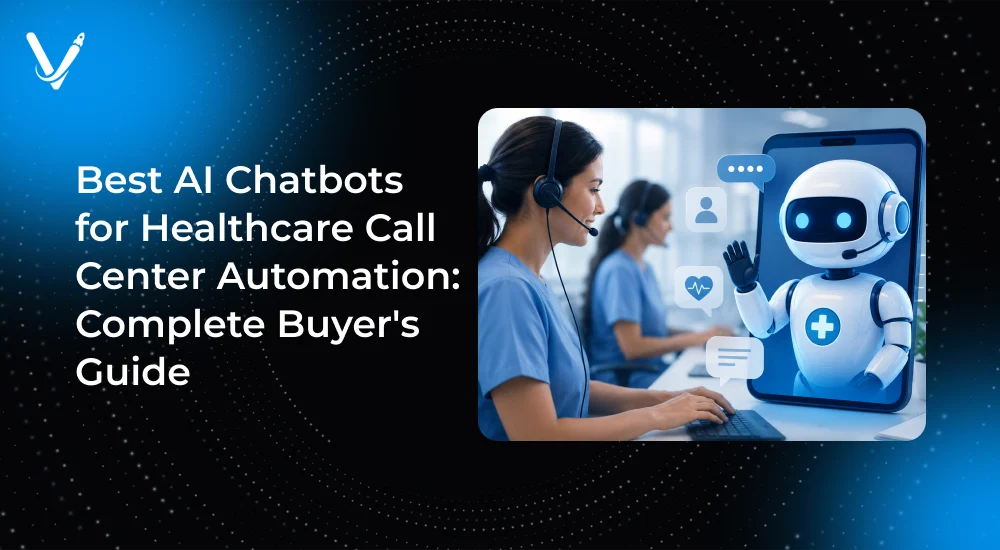
An AI chatbot for healthcare is software that uses artificial intelligence to talk with patients over text or voice. It answers questions, handles routine tasks, and routes complex issues to staff. In a call center, it works as a voice agent that can book appointments, share results, and reduce hold times.
These systems use natural language processing to understand what a patient means, not just the words they say. They connect to your scheduling and records systems to act on requests. When a case is too complex, they hand it to a human agent with the full context.
Text Chatbots vs Voice AI Agents
A text chatbot works on your website, app, or messaging. A voice AI agent answers the phone and speaks with patients in real time. Many healthcare providers use both, so patients get help on the channel they prefer. Voice AI is the core of healthcare call center automation.
Common Use Cases
• Appointment scheduling. Book, move, or cancel visits without an agent.
• Patient triage. Ask symptom questions and guide patients to the right level of care.
• Prescription reminders. Remind patients about refills and doses.
• Insurance inquiries. Answer coverage and billing questions.
• Follow-up communication. Check in after visits and share care instructions.
Why Healthcare Organizations Are Adopting Call Center Automation
The pull toward automation comes from four pressures that are all getting worse.
• Staff shortages. With physician and support shortages growing, teams cannot keep up with call volume by hiring alone.
•Rising call volume. Patients make about 3.5 calls for a single scheduling need, which floods the queue.
• High operating costs. A healthcare call center can cost around 13.9 million dollars a year to run, and about 43 percent goes to labor.
• Need for 24/7 support. Only about 19 percent of healthcare call centers run around the clock, yet patients call at all hours.
The cost of doing nothing is real. Studies show most patients will not wait on hold longer than two minutes, and many hang up after one. Each abandoned call can be a lost patient, since a bad phone experience makes people far more likely to switch providers. Automation fills the gaps that staffing alone cannot.
Key Features to Look for in AI Call Center Software for Healthcare
Not every platform is built for healthcare. When you compare AI call center software for healthcare, look for these features.
• Voice AI. Natural, real-time speech that patients find easy to talk to.
• Omnichannel support. One system across phone, chat, SMS, and web.
• EHR integration. Live links to records and scheduling like Epic or Cerner.
• HIPAA compliance. Built to protect patient data by design.
• Real-time analytics. Dashboards for call volume, wait times, and outcomes.
• Multilingual support. Service in the languages your patients speak.
• Human escalation. Smooth handoff to staff with full context.
• Security controls. Encryption, access limits, and audit logs as standard.
Best AI Chatbots for Healthcare Call Center Automation
The market has strong options, from healthcare-first tools to broad contact center platforms. Vendors like Hyro, Amazon Connect, and Genesys each take a different approach. The table below compares ten leading choices so you can shortlist the right fit.
| Tool | Key Features | Ideal Use Cases | Pros | Cons |
| Hyro | Healthcare conversational AI, EHR links, responsible AI | Health systems automating calls and web chat | Healthcare focus, quick setup | Narrower outside healthcare |
| Nuance DAX | Clinical voice AI, ambient documentation | Clinical notes and patient engagement | Deep voice and healthcare skill | Enterprise cost |
| Amelia | Enterprise conversational AI agent | Complex enterprise workflows | Strong understanding, integrations | Setup effort and cost |
| Cognigy | Voice and chat AI, agentic automation | Contact center automation | Flexible, omnichannel | Needs technical setup |
| Kore.ai | Enterprise AI platform, healthcare templates | Large multi-use deployments | Broad platform, prebuilt flows | Can be complex |
| Five9 | Cloud contact center with AI | Full contact center automation | Mature CCaaS, agent assist | Not healthcare specific |
| Genesys | Cloud CX, AI orchestration | Large omnichannel centers | Scalable, robust | Cost for small teams |
| Yellow.ai | Multilingual voice and chat AI | Global, multilingual support | Many languages, automation | Healthcare depth varies |
| Amazon Connect | AWS contact center, HIPAA-eligible | AWS-based, scalable centers | Scalable, pay as you go | Build-heavy, needs developers |
| Custom-built | Tailored to your workflows and EHR | Unique needs and full control | Full control, deep integration | Higher upfront cost and time |
Build vs Buy: Which Option Is Right for Your Healthcare Organization?
You can buy an off-the-shelf platform or build a custom solution. Off-the-shelf is faster to launch. Custom AI development services give you more control and a closer fit to your workflows. The table shows how they compare.
| Factor | Off-the-Shelf Platforms | Custom AI Solutions |
| Cost | Lower upfront, ongoing license fees | Higher upfront, lower long-term per use |
| Compliance | General HIPAA support | Built around your exact rules |
| Flexibility | Limited to platform features | Fits your workflows and brand |
| Scalability | Scales within the vendor's limits | Scales on your own architecture |
| Integration | Standard connectors | Deep links to your EHR and systems |
| Maintenance | Handled by the vendor | Owned by you or your partner |
For many providers, a custom or hybrid build wins when patient data, EHR depth, and compliance are central. AI application development services can also add automation to tools you already run, rather than replacing them. Our team covers this in healthcare software development.
AI Compliance and Security Considerations
Patient data is sensitive, so compliance is not optional. The best tool is the one you can trust with protected health information. Focus on these points.
•HIPAA compliance. The platform must meet HIPAA rules for handling patient data.
• Data privacy. Encrypt data in transit and at rest, and limit who can see it.
• Audit trails. Keep clear logs of who accessed what and when.
• Consent management. Record patient consent and honor their choices.
• Security monitoring. Watch for threats and unusual activity in real time.
• Responsible AI. Test for bias and avoid advice that could mislead a patient.
• Human oversight. Keep staff reviewing high-risk or sensitive interactions.
One practical rule stands out. Healthcare organizations should prioritize vendors that support HIPAA requirements, enterprise-grade security controls, and Business Associate Agreements, known as BAAs. A vendor that will not sign a BAA is a vendor to avoid.
Real Business Benefits of AI Voice Chatbots for Hospitals
Beyond the technology, an AI voice chatbot for hospitals delivers benefits that leaders can measure.
• Reduced operational costs. Automating routine calls cuts labor and overtime spend.
• Better patient experience. Short waits and quick answers raise satisfaction.
• 24/7 support. Patients get help nights and weekends, not just office hours.
• Increased scheduling efficiency. More bookings handled in one call, with fewer callbacks.
• Lower call abandonment. Instant answers keep patients from hanging up.
• Improved staff productivity. Agents focus on complex cases that need a human touch.
These gains match a wider trend. AI-powered contact centers and voice AI are spreading fast across healthcare because they solve the exact problems that staffing shortages create.
Future Trends in Healthcare Call Center Automation
The field is moving quickly. These trends will shape the next few years of AI customer service solutions for healthcare industry teams.
• Agentic AI. Systems that plan and act across steps, not just answer one question.
• Voice-first support. Natural speech becomes the main way patients reach care.
• AI-powered patient navigation. Tools that guide patients to the right service or specialist.
• Predictive patient engagement. Reaching out before a problem grows, based on data.
• Conversational AI. More natural, human-like back and forth with patients.
• Autonomous support systems. Whole workflows that run with light human oversight.
The market growth reflects this shift. With the call center AI market on track to more than triple by 2030, and healthcare leading the way, these tools will become standard rather than optional.
How to Choose the Right AI Chatbot for Healthcare
Use this checklist to compare vendors and avoid costly mistakes.
• Compliance. Confirm HIPAA support and a signed BAA.
• Integration. Check that it connects to your EHR and phone systems.
• Security. Look for encryption, access controls, and audit logs.
• Scalability. Make sure it can grow with your call volume.
• Reporting. Ask for real-time dashboards and clear metrics.
• Vendor support. Expect training, onboarding, and ongoing help.
• Total cost of ownership. Add build, licenses, and support, not just the sticker price.
Conclusion
Healthcare call centers face a hard mix of rising demand and thin staffing. An AI chatbot for healthcare helps by handling routine calls, cutting hold times, and freeing staff for complex care. The market is growing fast, and healthcare is leading it.
The right choice depends on your needs. Off-the-shelf tools launch quickly, while custom builds offer deeper control and integration. Whatever you pick, compliance and patient trust must come first.
Organizations exploring healthcare call center automation should focus on solutions that balance automation, compliance, patient experience, and scalability.





 Jul 10, 2026